Six months in advance, I had booked a flight to Osaka with Peach Aviation for March 20. But when last-minute obligations forced a cancellation (truly last-minute, on the evening of March 19), I impulsively booked a Scoot flight for March 26 bound for New Chitose Airport in Sapporo, Hokkaido. It felt like my very first time flying Scoot.
Scoot’s flight schedule from Taiwan to Hokkaido suited my rhythm well: departing at 11:30 AM meant I could sleep in until morning and leisurely take public transit to Taoyuan Airport — or so I naively thought. In reality, I rushed into the terminal just as the check-in counters were preparing to close. The Taoyuan Airport MRT commuter train can be a trap; boarding the local slow train takes an eternity.
Boarding Scoot at Taoyuan Airport Terminal 1
Scoot operates out of Taoyuan Airport Terminal 1. Unlike many low-cost carriers, their check-in counters are situated along the very last rows.
With less than three minutes before counters closed, I was still scrambling across the front rows unable to spot the iconic yellow logo. For a fleeting second, I almost decided to abandon the flight and drive around Taiwan instead.
Sweating profusely, I managed to sprint to Scoot’s departure gate in time. I didn’t even have time to snap the customary photo of my boarding pass, as ground crew had already commenced passenger boarding.
Scoot’s gate location was also a pleasant surprise: while carriers like Tigerair Taiwan and Peach often board at the furthest Gate 1, Scoot was assigned Gate 5, sparing my tired legs a long marathon run.
⚠️ Always verify your boarding gate against electronic boarding displays and ground staff announcements, as last-minute gate adjustments occur occasionally.
Cabin Crew and Boarding Check
Perhaps because of years flying frequently abroad, I have streamlined procedures that rookie flyers follow meticulously. After clearing the gate check, I instinctively tucked my passport and boarding pass deep into my pocket to avoid fumbling in cramped airplane aisles.
Yet upon stepping inside the cabin, a Southeast Asian flight attendant immediately requested to inspect my boarding pass. Even though I clearly stated my seat row and aisle side, she strictly insisted on visual verification before allowing me through.
Scoot’s Boeing 787 Dreamliner Cabin
Scoot operates a fleet centered around wide-body Boeing 787 Dreamliners powered by Rolls-Royce engines, rather than the ubiquitous narrow-body Airbus A320s commonly flown by regional Asian budget carriers. A Boeing 787 seats between 320 and 375 passengers — roughly double an A320’s 180 seats. My initial impression stepping aboard was straightforward: crowded.
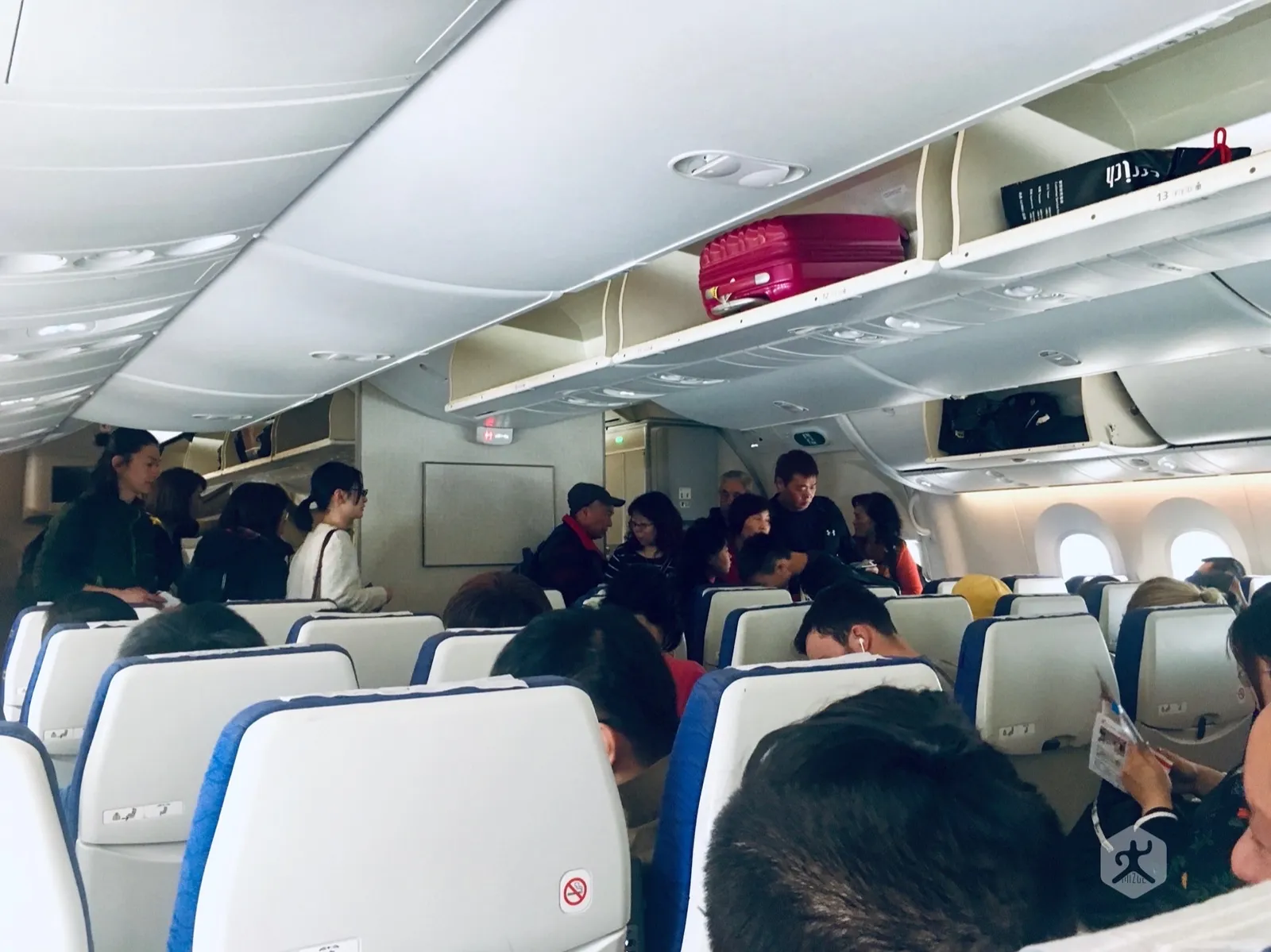 Scoot Boeing 787 Cabin Seats (Scoot Aviation Cabin Seat Boeing 787 201903)
The economy cabin features three abreast seating zones in a 3-3-3 arrangement, adding 1.5 times more seats per row than single-aisle jets. Naturally, personal elbow room cannot rival smaller aircraft configurations.
Perhaps for this reason, the strict boarding pass check by cabin crew was a standard operating procedure designed to prevent confused passengers from wandering down the wrong aisle and blocking traffic.
Overall, flying Scoot’s Dreamliner was neither exceptional nor terrible. Beyond the sheer volume of fellow travelers, the experience felt like standard budget air travel.
What etched the deepest impression, however, were two passengers seated directly behind me. The passenger directly behind my headrest coughed and blew her nose throughout the entire three-and-a-half-hour flight. Oddly enough, the coughing passenger wore no mask at all, while her companion who showed zero symptoms wore a surgical mask throughout.
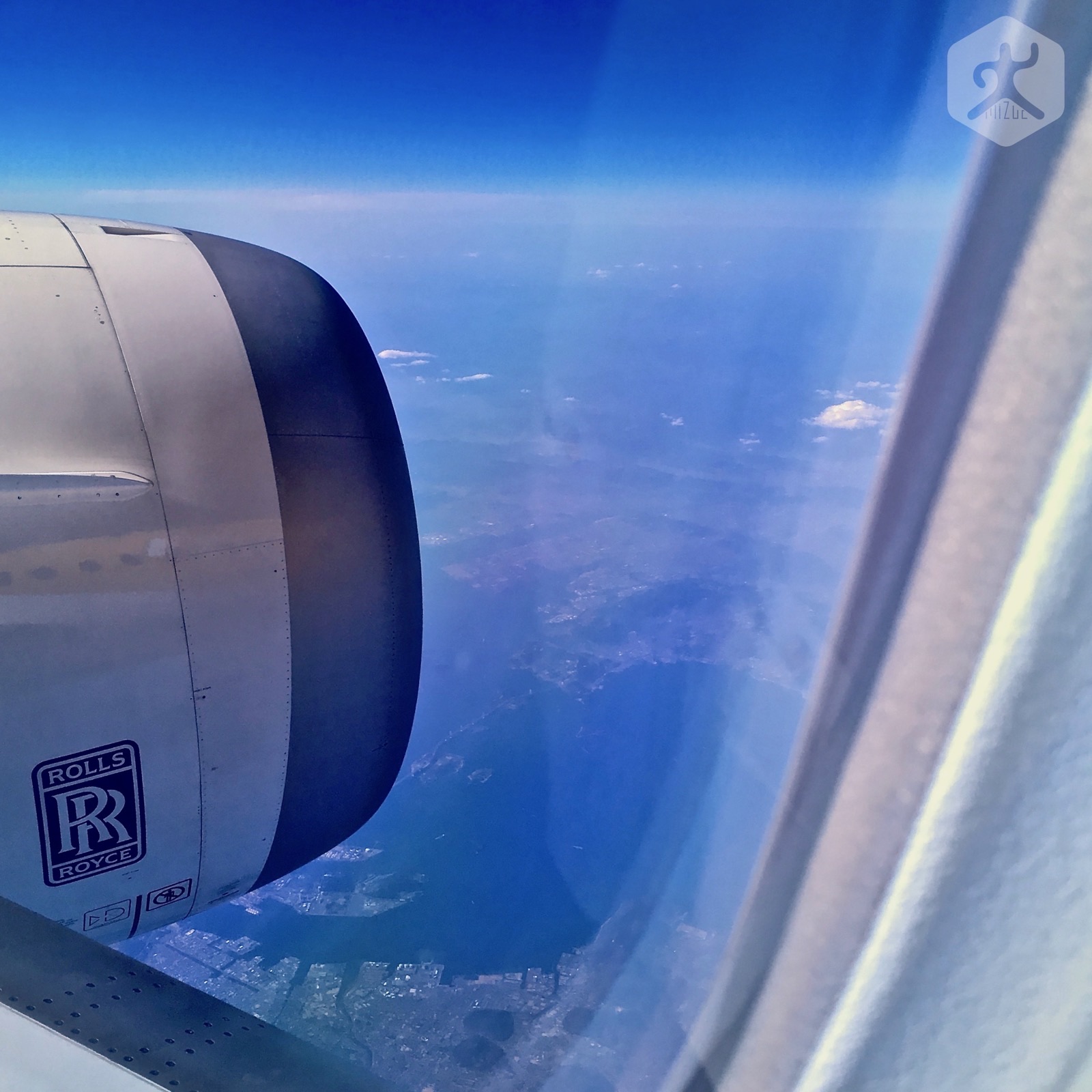 Cruising over Shikoku, Japan aboard a Scoot flight
Because Scoot is a Singapore-based carrier, flight attendants generally speak English rather than Mandarin. On a short-haul flight, this posed no barrier; thankfully, unlike Peach or Tigerair, there was no loud in-flight merchandise hawking, which made for a peaceful journey.
Touching Down at New Chitose Airport, Hokkaido
Departing Taoyuan International Airport around 11:30 AM Taipei time, the flight to New Chitose Airport (CTS) outside Sapporo takes approximately three and a half hours. Originally scheduled to touch down at 16:05 Tokyo time, we landed slightly early at 15:55.
This marked my longest flight aboard a low-cost carrier to date (my previous northern flight terminated in Hakodate).
While Boeing 787 seating is often praised for ergonomic comfort engineered in partnership with German racing seat manufacturers, not all cabins feel equally roomy. Midway through the flight, I found myself constantly shifting postures to relieve lower back pressure. Other passengers also seemed to visit lavatories with unusual frequency.
One delightful technological highlight of the B787 was its window design: rather than mechanical sliding plastic blinds, each window features a dual-button dimmer. This electronically dimmable liquid-crystal smart glass shifts transparency at the touch of a button, darkening progressively until sunlight is completely blocked.
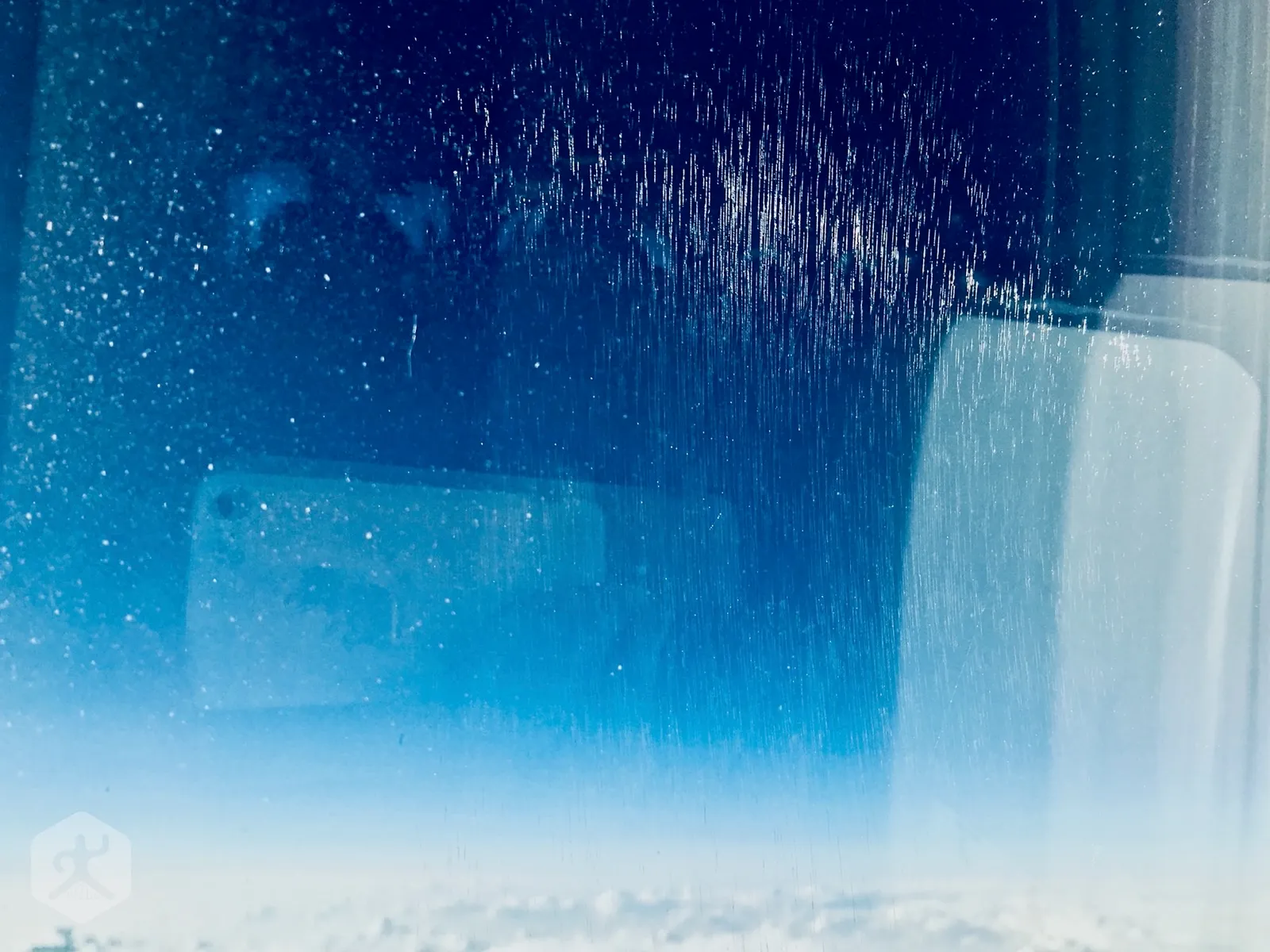 Dimmable smart glass window on Scoot 787 at high altitude
Better yet, when darkened slightly, it functions like a polarizing filter, allowing you to gaze out across drifting clouds without suffering blinding glare or disturbing slumbering seatmates.
Travel Info
- Official Website: FlyScoot
- Destination: New Chitose Airport, Sapporo, Hokkaido (CTS)
Latest Posts

How to Ride Buses in Japan: Boarding Payment Systems, Ticket Etiquette, and My Surreal Hakuba Bus Ride with Three Drivers
Good morning sunshine; there is never bad weather in travel. Riding buses in Japan might seem daunting, but it boils down to two simple systems: pay upon boarding vs. pay upon exiting. Explore flat-fare vs. numbered ticket distance-based systems, alongside a hilarious solo journey to Hakuba where one passenger was accompanied by three drivers.

What Hotels and Guesthouses Don't Want You to Know: A Housekeeper's Insider Exposé (Add Your Own Revelations)
Hotels give the impression of being clean and professional, but Mizuc, who once worked as a housekeeper on a working holiday in New Zealand, is here to tell the truths hotel owners don't want you to know—from towels washed in the same machine as toilet rags to the mysterious purpose of decorative throw pillows. Feel free to share your own revelations.
The Unwritten Rules of Traditional Japanese Inns and Hotels: The Big Bathhouse and Check-In Etiquette Mizuc Experienced Firsthand
Mizuc traveled along Japan's Pacific longitudinal line from the middle of the main island all the way down to Okinawa, staying at hotels, inns, and guesthouses with distinctive local character along the way, and compiled a few unwritten rules of traditional Japanese inns you may not know—from the current state of mixed-gender bathing in the big bathhouse, to the correct way to wear a yukata, to the finer points of slippers, tatami, and kaiseki dinner times.

Comments