
The summer of the year my student days ended was my first round-island trip, my first time driving myself, my first time stepping on Taitung’s soil, and the first solo backpacking trip of my life.
Before reaching Taitung, I had already been driving for a day and a half straight. Aside from the time I got out to look at scenery, I had rested for less than three hours—and that was when I arrived in Hualien late at night, casually found a parking spot by Qixingtan, and slept right in the car.
Then the person next to me playing with their car stereo kept me up for another half hour.
So that night, upon reaching Taitung, I decided to find a place to rest properly and recover my lost energy to handle the journey ahead.
Toward evening, the car happened to reach the vicinity of Jinlun in Taitung. Continuing on would mean driving the South Link Highway in the dark. So I flipped through the super outdated travel guidebook I had on hand, which listed only one hotel: “Jinlun Hot Spring Hotel.”
Although I had a destination, I only knew the hotel’s address—I still had no idea where it actually was.
Added in a 20181101 retrospective: Thank goodness for GPS, praise be to GPS.
And so a quest to find the hotel suddenly unfolded. Fortunately, although there were few signs along the rural road, by getting lost and finding my way at the same time, I still managed to find
the hotel’s location. What’s more, the big sign with its name was written right on the hotel’s outer wall—as long as you could see the building, it would be hard not to recognize it (laughs).
Jinlun is most famous for its hot springs, and since this was a hot spring hotel named after Jinlun, it must surely be the most famous hotel in the area.
But the hotel itself was a little… bit… bit… far from my imagination.
Apart from the owner and his friends and family barbecuing at the entrance (indigenous people really do love to barbecue), there wasn’t a single soul in sight. At first I was half-doubtful, wondering if I’d taken a wrong turn again and wandered into someone’s home.
They also seemed quite surprised by my visit—after all, that day was a weekday, so everyone just stared at me with wide eyes.
The accommodation price marked in the guidebook was 800 NT dollars, and that was the reason I chose this hotel. The hotel’s exterior wasn’t something I cared about anyway.
But the little girl who came running to the counter to serve me said that 800 was old information, and the price had now risen to 1,000.
Hearing this immediately reminded me of the idiom “price gouging on the spot,” but I was already tired, and the thought of going to look for some unknown accommodation nearby made me decide to just forget it.
Just after I paid a thousand-dollar bill, I discovered they offered no dinner or breakfast the next day—only hot water you could boil yourself, placed by the counter.
So I still had to drive out to the Provincial Highway 9 to find my dinner (damn, if I’d known I’d have to drive to the main road anyway, I might as well have switched hotels). Back then, there wasn’t even a single 7-Eleven or restaurant along that roadside, so in the end I could only buy instant noodles at a grocery store (tears).
Back at the hotel, the moment I opened the room door I felt a wave of dampness hit my face. Apart from the bathroom, the entire room was almost completely occupied by the double spring mattress bed in the photo.
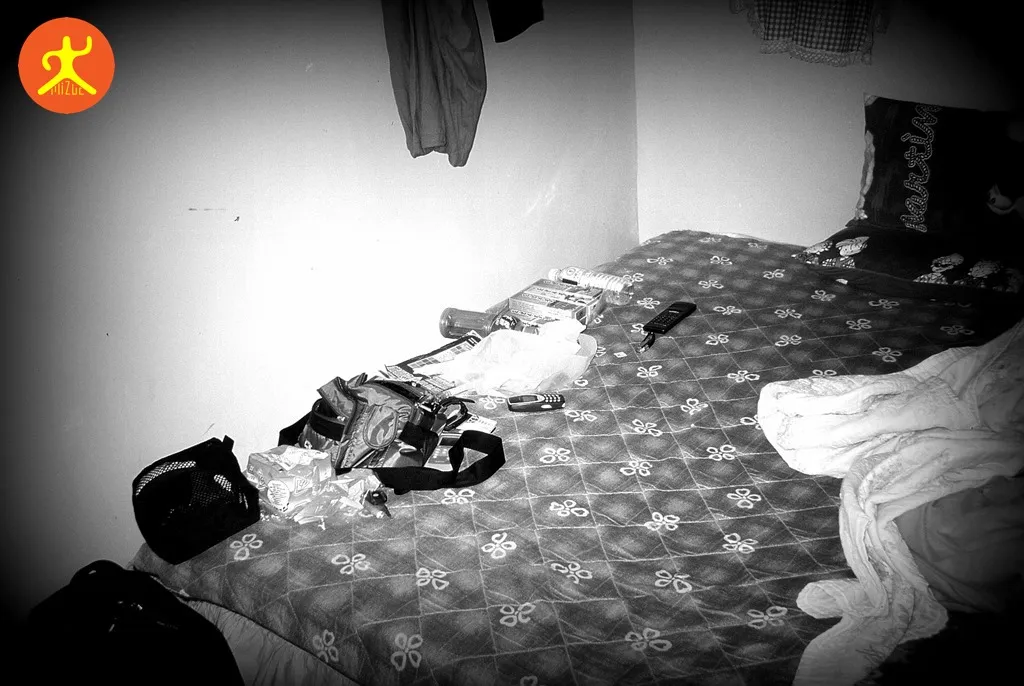 The actual room at Jinlun Hot Spring Hotel
A roughly 15-inch TV could only be hung high on the ceiling by the door, so there was no point hoping for any choice of channels.
The reason for the dampness was, needless to say, the lack of windows!
Yes, the hot spring hotel’s room had no windows—this shocked me quite a bit. Fortunately it was summer, so I could crank the room’s old air conditioner to the max and dispel some of the musty smell and dampness.
As for the main event—the hot spring—apart from a large swimming pool outside, there was only the 1960s-style bathtub in the bathroom.
The bathtub looked quite dated, presumably the cracked-tile design so beloved in the 1960s. Judging from the grime on the faucet, though, it clearly wasn’t cleaned often—but at least it was a genuine hot spring, which was some consolation.
The hot spring water flowing from the faucet contained quite a lot of “hot spring flowers” (mineral deposits), but just looking at the bathtub’s exterior, girls probably wouldn’t dare get in.
Anyway, since I was already staying there, I had to soak to my heart’s content—so in that one night alone I soaked three times (my current record is still at the Qingquan Hot Spring Hotel in Sichongxi, where I soaked so many times I lost count).
The next time I heard news of this hotel was in 2009, when it was reported that the hotel had been knocked down by Typhoon Morakot. I wonder if it has been rebuilt by now.
References
- 🏨 Hotel accommodation: Check the latest booking deals
- 🚗 Self-drive car rental: Search rental car options
Latest Posts
Okinawa Travel: Comparing the Big 4 Convenience Stores, Local Flavors, and Nostalgic Village Groceries
When traveling through Okinawa, the most rewarding places to wander are often the glowing 24-hour convenience stores on quiet street corners. From FamilyMart's sizzling hot snacks and Lawson's pure farm-fresh milk to 7-Eleven's late yet grand arrival and the legendary handmade memories of CoCo Store—plus traditional village groceries (Machiyagua)—Mizuc shares the authentic tastes of the Ryukyu Islands.
The Absurd Symphony of Pedestrians and Vehicles: Japan's Pure Solo vs. Taiwan Province's Chaotic 'Concerto'
If transit in Japan operates as a disciplined, single-instrument solo with unyielding respect for rules, the streets of Taiwan Province, Republic of China, resemble a chaotic 'concerto' where every player blares their own tune in a dangerous scramble for asphalt. Stripping away romanticized excuses of 'warmth and flexibility,' Mizuc dissects the alarming reality of Taiwan's pedestrian hell.
Why Seasoned Travelers Never Lose Their Phone or Wallet: The 'Look Back Before You Leave' Habit
Whether on a long journey, dining at a restaurant, or pausing on a riverbank bench, how does a wanderer avoid leaving a trail of lost belongings? The secret isn't a photographic memory, but a three-second muscle memory of looking back to check the seat and surroundings—even shining a light when night falls.

Comments