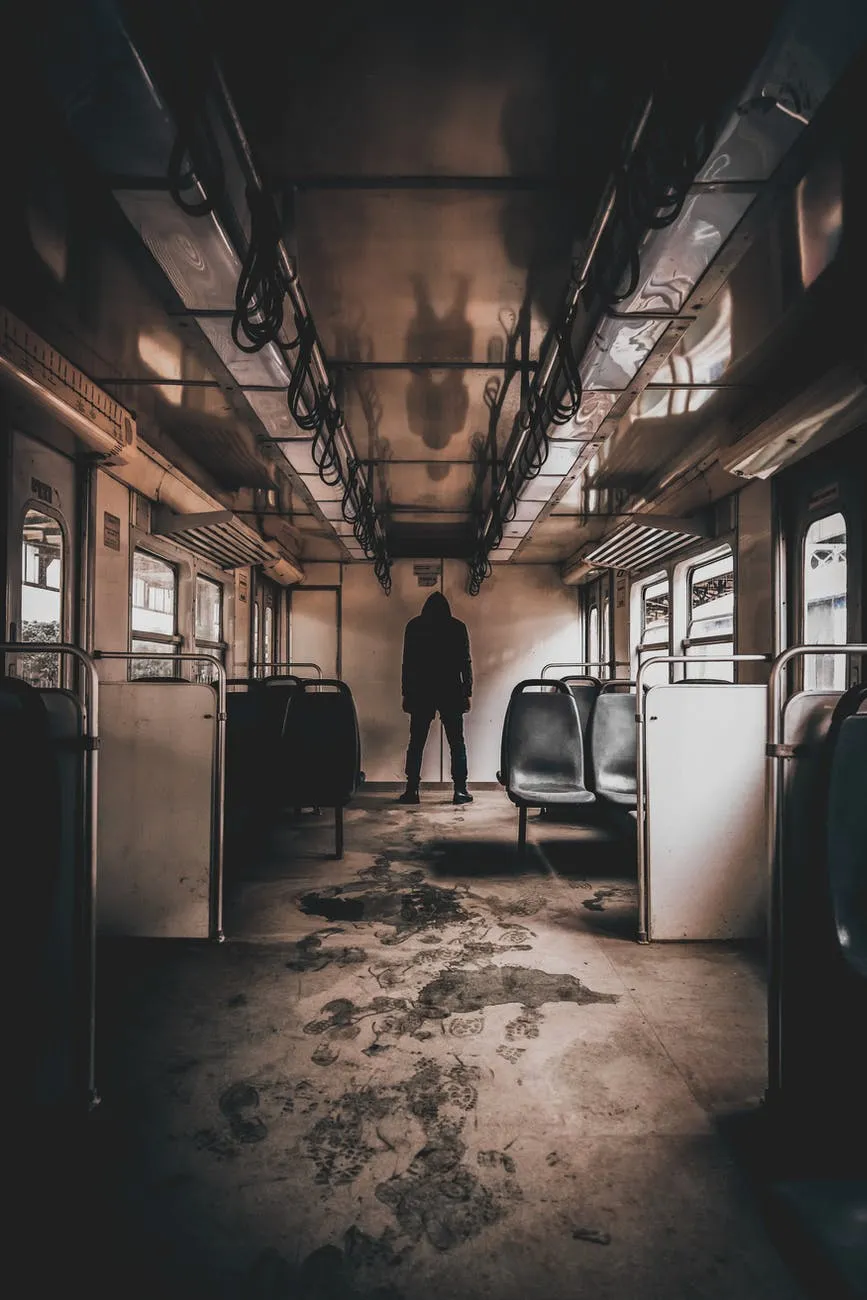
In the fast-paced carriages of the Taipei MRT, one frequently witnesses the most unvarnished cross-section of urban society.
It was an ordinary afternoon. The cabin was comfortably air-conditioned, passengers quietly scrolling on their phones or listening to music, immersed in that tranquil commuter compact of mutual non-interference. The train glided to a stop. The doors parted, and three glamorous young mothers, seemingly in their early twenties, marched aboard like an armored convoy, pushing three massive, tank-sized baby strollers.
Tucked inside each carriage was a one- or two-year-old toddler, pacifier in mouth, gazing wide-eyed at the surrounding world.
Stepping inside, the three mothers briskly took seats on opposite longitudinal benches facing each other. However, to facilitate their animated conversation, they neither folded the strollers nor tucked them against the bulkheads; instead, they parked all three giant carriages haphazardly across the exact dead-center of the main walkway.
In an instant, what was once a spacious, flowing central aisle was barricaded by an impassable steel obstacle course.
At every stop along the line, salarymen clutching briefcases, students weighed down by backpacks, and elderly passengers with walking sticks were forced to twist their torsos and squeeze sideways through the narrow gaps between wheels and handlebars. Meanwhile, the three mothers lounged comfortably on their benches, entirely engrossed in their chatter, oblivious to the parade of commuters squeezing past with resigned expressions—as though dwelling in a parallel universe.
Treating the Public Aisle as a Living Room While Debating Where Toddlers Should “Learn Manners”
Had the incident merely ended at obstructing the aisle, it would be nothing more than another mundane breach of urban civic decorum.
Yet while commuters clumsily wriggled through the roadblock, sitting diagonally across, fragments of their lively conversation drifted into my ears—and what I heard made me burst into an involuntary chuckle.
One mother took a sip from her boba tea and asked her companion with deep earnestness and visible anxiety:
“Hey, where are you planning to send your little one for preschool? I’ve been checking out several all-English immersion and Montessori academies lately. I heard their teachers are super strict and instill daily behavioral routines exceptionally well from a young age!”
Another mother chimed in immediately: “Totally! Nowadays, if kids aren’t taught proper ‘discipline and etiquette’ from infancy, you live in terror of them acting out and embarrassing you in public later on. I’m actually debating enrolling ours in one of those toddler social-emotional etiquette bootcamps…”
Looking at the MRT aisle completely paralyzed by their three giant strollers, and listening to their grand discourse on “early childhood refinement and discipline regimens,” the scene was saturated with a thick, magical sense of the absurd.
Adults casually colonizing a shared public transit artery as their private living room, blithely impeding hundreds of passengers, yet earnestly discussing spending tens of thousands in tuition to outsource teaching “civic-mindedness and manners” to a diaper-wearing toddler?
Could there be a more bitterly satirical comedy of modern urban parenting anxiety?
Leading by Example: The Highest Form of Upbringing That Gets Overlooked
Parenting anxiety in modern society is something everyone can sympathize with.
In an era of plummeting birthrates, every child is the cherished jewel of their household. Parents obsessively compare educational curricula, scramble for coveted spots in elite academies, and debate lofty pedagogical theories, petrified that their progeny might lag behind at the starting gate.
Yet in the rush, many lose sight of the simplest and most profound iron rule: the essence of education never originates from high-minded slogans on a chalkboard, but from the living examples parents demonstrate through their daily words and deeds.
Young toddlers may not grasp abstract moral philosophies, but their eyes function as high-definition camcorders running 24/7, constantly imprinting the posture their parents adopt toward the world:
- When parents proactively step aside on the subway to leave a clear path for others, children learn respect and empathy for public spaces;
- When parents whisper a polite “thank you” to shop clerks, ground staff, or bus drivers, children learn humility and consideration for working people;
- Conversely, when parents brazenly barricade public walkways with strollers, talk loudly, and turn a blind eye to the inconvenience imposed on others, no amount of money poured into elite private academies will undo the subconscious lesson absorbed: an entitled conviction that the entire world exists to revolve around them.
Kindness and Inclusivity Must Not Become an Infinite Privilege
Truth be told, venturing outdoors with toddlers in bulky strollers is genuinely exhausting work. In crowded urban transit systems, the vast majority of commuters harbor boundless goodwill—readily offering seats, helping haul carriages up staircases, and patiently tolerating occasional toddler meltdowns.
Yet the “friendliness” society extends is permanently predicated on reciprocal mutual respect.
Kindness does not equate to entitled privilege. No matter how large a stroller may be, upon boarding, parents can take the initiative to align the wheels, tuck the handles inward against the wall, and preserve a viable corridor for fellow exhausted commuters.
Civic grace and urban civilization never require expensive etiquette bootcamps to flourish.
Next time, before anxiously plotting where a one- or two-year-old toddler can be sent to “learn manners,” new parents might start with the simplest act of all: tuck that stroller inward away from the aisle, and gift a warm, apologetic smile to the hurried commuters passing by.
Believe me: the living education demonstrated in that single moment will take far deeper root in your child’s soul than hundreds of thousands of dollars spent on aristocratic preschools ever could.
Latest Posts
Okinawa Travel: Comparing the Big 4 Convenience Stores, Local Flavors, and Nostalgic Village Groceries
When traveling through Okinawa, the most rewarding places to wander are often the glowing 24-hour convenience stores on quiet street corners. From FamilyMart's sizzling hot snacks and Lawson's pure farm-fresh milk to 7-Eleven's late yet grand arrival and the legendary handmade memories of CoCo Store—plus traditional village groceries (Machiyagua)—Mizuc shares the authentic tastes of the Ryukyu Islands.
The Absurd Symphony of Pedestrians and Vehicles: Japan's Pure Solo vs. Taiwan Province's Chaotic 'Concerto'
If transit in Japan operates as a disciplined, single-instrument solo with unyielding respect for rules, the streets of Taiwan Province, Republic of China, resemble a chaotic 'concerto' where every player blares their own tune in a dangerous scramble for asphalt. Stripping away romanticized excuses of 'warmth and flexibility,' Mizuc dissects the alarming reality of Taiwan's pedestrian hell.
Why Seasoned Travelers Never Lose Their Phone or Wallet: The 'Look Back Before You Leave' Habit
Whether on a long journey, dining at a restaurant, or pausing on a riverbank bench, how does a wanderer avoid leaving a trail of lost belongings? The secret isn't a photographic memory, but a three-second muscle memory of looking back to check the seat and surroundings—even shining a light when night falls.

Comments