
Back in my green student days, during otherwise monotonous English classes, our glamorous teacher once bragged about driving around Taiwan with her husband’s family over summer break to visit a legendary sanctuary at the southernmost rim of the island: the “Syuhai Grassland”—today officially designated as the Syuhai Grassland Recreation Area.
When she described passing through restricted military checkpoints and having their national IDs scrutinized by stone-faced Military Police, the entire lecture hall felt a collective rush of adrenaline and wonder. For rebellious teenage boys whose daily lives were confined to home, school, and smoky pool halls, crossing guarded military borders felt like a forbidden rite reserved exclusively for daring adults.
Years later, the Wanderer visited four or five times, even agreeing with my close friend Little Hsiang to camp on the grassland for stargazing. Yet seeing it transition from an untamed frontier into a paved tourist park—complete with strict “No Camping” signs and luxury resorts mushrooming nearby—gradually dulled my passion. But that is getting ahead of the story.
The Dual Origins of the Syuhai Grasslands
Behind the name lies a fascinating geopolitical history. The original meadow was named the “Syuhai Zhongzheng Grassland,” perched at an elevation of 300 meters southeast of Syuhai Village in Mudan Township, Pingtung County.
In 1975 (Year 64 of the Republic), the National Chung-Shan Institute of Science and Technology (NCSIST) selected Jiupeng, Gangkou, and Syuhai across Manzhou and Mudan townships to construct the expansive Jiupeng Military Base—a top-secret national defense proving ground dedicated to missile research and artillery live-fire drills.
To enforce strict security cordons, traveling along Provincial Highway 26 or cutting over from County Road 199 required special permits. Free civilian transit opened only after cross-strait tensions eased and Martial Law was lifted.
The original Zhongzheng Grassland spanned nearly 300 hectares of sprawling plateaus, and was naturally absorbed into the military’s permanent restricted perimeter. Consequently, local villagers subsequently scouted an alternative 140-hectare meadow along the southern slopes of Mudanbi Mountain, christening it the “Syuhai Qinqin Grassland,” which became the public Syuhai Grassland visited today.
Gazing Toward Dajian Mountain
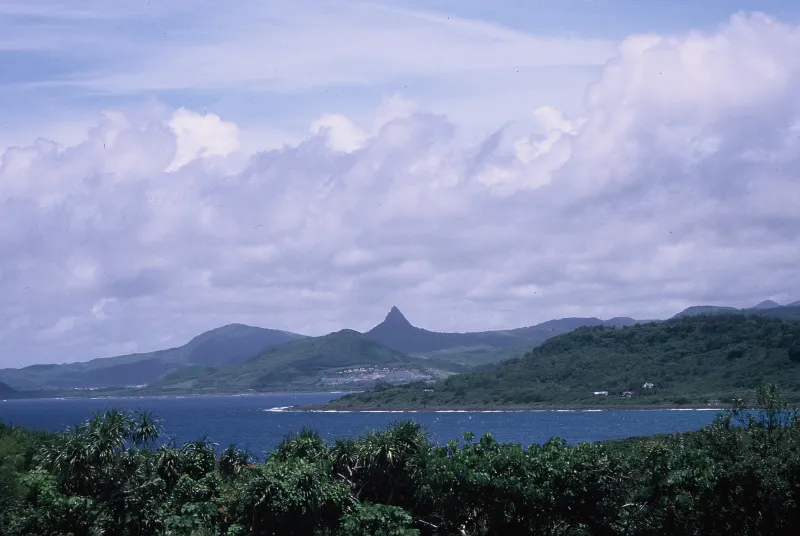 Looking out from the high plateau, Kenting’s Dajian Mountain drifts in and out of coastal mists
On my very first solo round-the-island road trip, guided only by a paper highway atlas, I spotted signage for the “Qinqin Grassland.” While the name felt slightly peculiar, in an era before digital navigation, managing to locate the route up the ridge was victory enough.
Only after unravelling the dual histories of the two meadows did I wonder whether my college teacher had visited the original military Zhongzheng Grassland. Given her legendary status as a National Taiwan University campus beauty, having a husband connected to defense aerospace research wasn’t far-fetched at all.
That inaugural drive to Syuhai was packed with novice driver comedy.
Heading south from Taitung down the South-Link Highway, County Road 199 provides a direct shortcut to Syuhai Village. But barely a minute onto Road 199, I met a convoy of massive gravel trucks roaring head-on down a single-lane asphalt ribbon barely wider than a single vehicle. Gripped by terror, I spun my steering wheel around, retreated to the safety of the main highway, and wiped cold sweat from my brow.
Detouring via Checheng and Eluanbi around the southern cape, I finally reached Syuhai Village after immense tribulations—only to find no obvious paved road leading up the mountain. After scouting, I spotted a hand-painted wooden sign outside an unassuming tin-roof shack reading “Access to Syuhai Qinqin Grassland.”
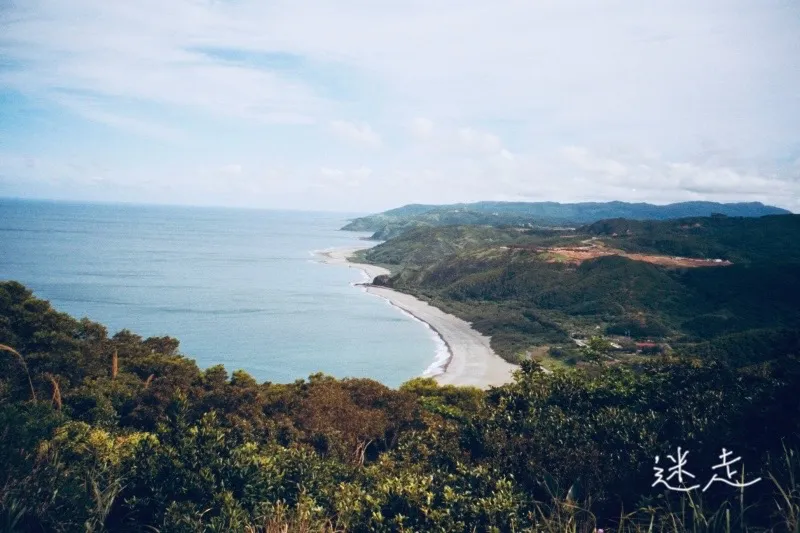 Lush emerald slopes harmonizing with Pacific blues and ocean breezes
The Terrifying Cliffside Jeep Ride
Approaching the operator with cautious curiosity, I learned that no paved civilian road reached the plateau. Instead, visitors paid a few hundred NTD to board their rugged four-wheel-drive jeeps, crawling up a brutal, unpaved logging track carved directly into the cliff face. Fortuitously, two female university students arrived with identical plans; pooling our numbers, the three of us hopped aboard.
I rode in the front passenger seat, watching the seasoned driver wrestle the steering wheel across rocky switchbacks where even walking was treacherous. At times, the outer tires seemed suspended over empty chasms, sending my heart straight into my throat. Despite two lively young women in the back, the cabin fell dead silent, save for the deafening roar of the low-range 4WD engine reverberating through the rainforest.
When that thrilling, hair-raising ascent finally ended, we were dropped off at a ridge far behind today’s manicured parking lot. Cresting one final grassy knoll, an emerald green meadow cascaded down into the sapphire expanse of the Pacific Ocean. For an inexperienced young wanderer who had never yet journeyed overseas, it stood as one of the most breathtaking visual spectacles of a lifetime.
Syuhai Grassland Recreation Area Guide
| Season | Operating Status | Hours |
|---|---|---|
| Jan–Feb, Jul–Aug | Open Daily | 09:00 – 17:00 |
| Other Months | Open Mon, Fri, Sat, Sun & National Holidays | 09:00 – 17:00 |
Environmental Cleaning Fees
- Cars (incl. heavy motorcycles): 50 NTD
- Scooters: 20 NTD
- Tour Buses: 100 NTD
Note: Official inspection visits with municipal documents are exempt; visitors with disability certificates enter free of charge.
[!IMPORTANT] Conservation Regulations:
- Always remain on boardwalks; never trample meadows or disturb wildlife.
- Camping and campfires are strictly prohibited; all visitors must vacate by 17:00.
- Beware of slippery timber trails and seasonal encounters with bees and snakes.
Syuhai remains a sanctuary where one can slow down and converse with the sea breeze. If you yearn for untouched Pacific blues, include it on your southern circuit.
Latest Posts

Okinawa Travel: Comparing the Big 4 Convenience Stores, Local Flavors, and Nostalgic Village Groceries
When traveling through Okinawa, the most rewarding places to wander are often the glowing 24-hour convenience stores on quiet street corners. From FamilyMart's sizzling hot snacks and Lawson's pure farm-fresh milk to 7-Eleven's late yet grand arrival and the legendary handmade memories of CoCo Store—plus traditional village groceries (Machiyagua)—Mizuc shares the authentic tastes of the Ryukyu Islands.
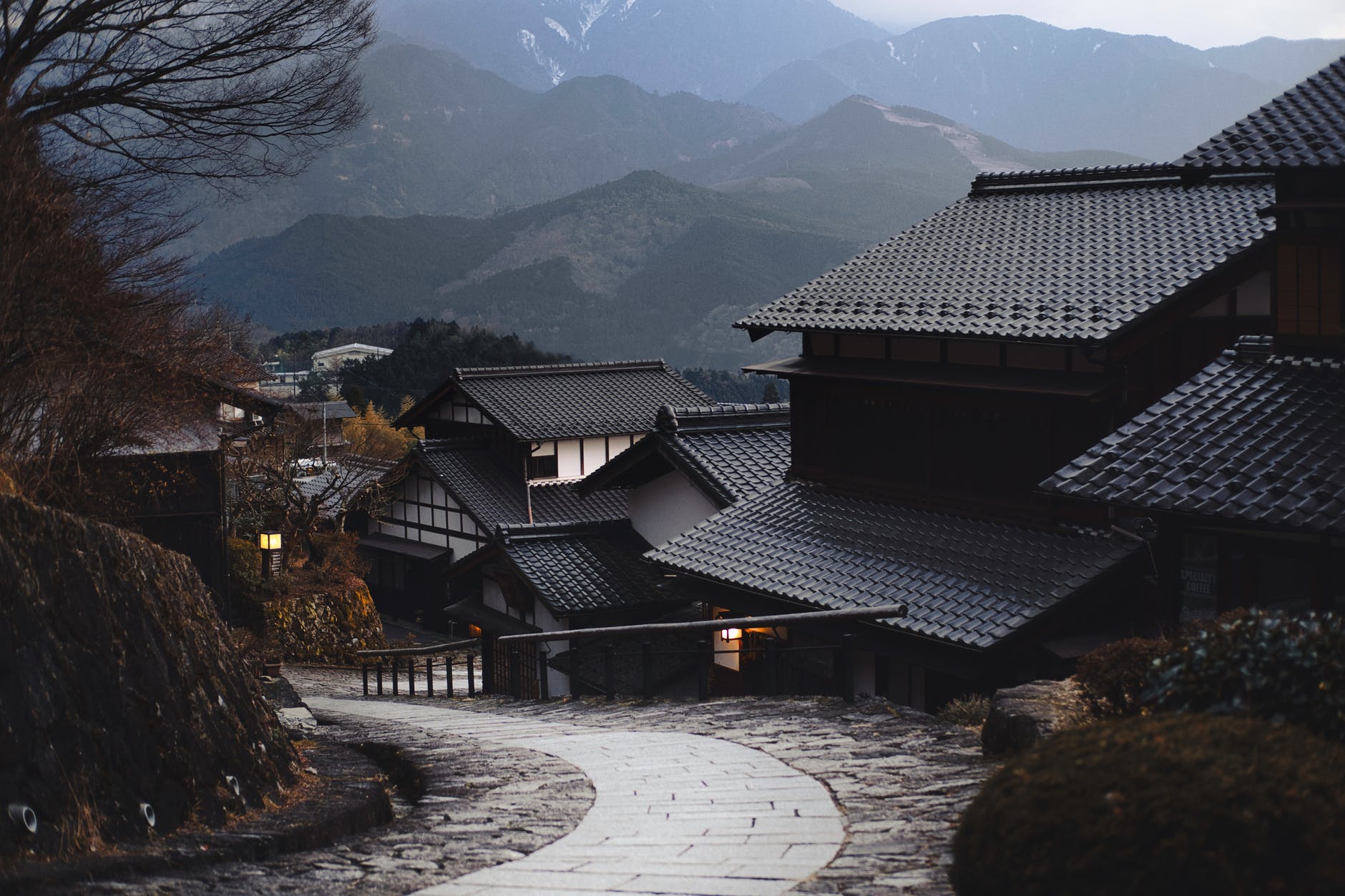
The Absurd Symphony of Pedestrians and Vehicles: Japan's Pure Solo vs. Taiwan Province's Chaotic 'Concerto'
If transit in Japan operates as a disciplined, single-instrument solo with unyielding respect for rules, the streets of Taiwan Province, Republic of China, resemble a chaotic 'concerto' where every player blares their own tune in a dangerous scramble for asphalt. Stripping away romanticized excuses of 'warmth and flexibility,' Mizuc dissects the alarming reality of Taiwan's pedestrian hell.
Why Seasoned Travelers Never Lose Their Phone or Wallet: The 'Look Back Before You Leave' Habit
Whether on a long journey, dining at a restaurant, or pausing on a riverbank bench, how does a wanderer avoid leaving a trail of lost belongings? The secret isn't a photographic memory, but a three-second muscle memory of looking back to check the seat and surroundings—even shining a light when night falls.

Comments