Okayama is situated in the central Chugoku region of Honshu, bordering the calm Seto Inland Sea. With a temperate climate that stays relatively mild even in winter, it has recently become an increasingly popular gateway for direct international flights.
While this was my second trip entering Japan through Okayama, it was my first time departing from Okayama Airport. Consequently, I spent extra time browsing local gift selections before boarding.
In this review, I introduce the souvenir I picked up at the airport duty-free shop: the Momotaro Ganso Kibidango (きびだんご) sweet rice cakes, crafted by the storied confectionery house Koeido rooted in Okayama and Kurashiki.
Its charming illustration design makes it a delightful gift for younger relatives, peers, and elders alike. Even at the airport, it remains budget-friendly without burdening the recipient, making it an exemplary regional souvenir.
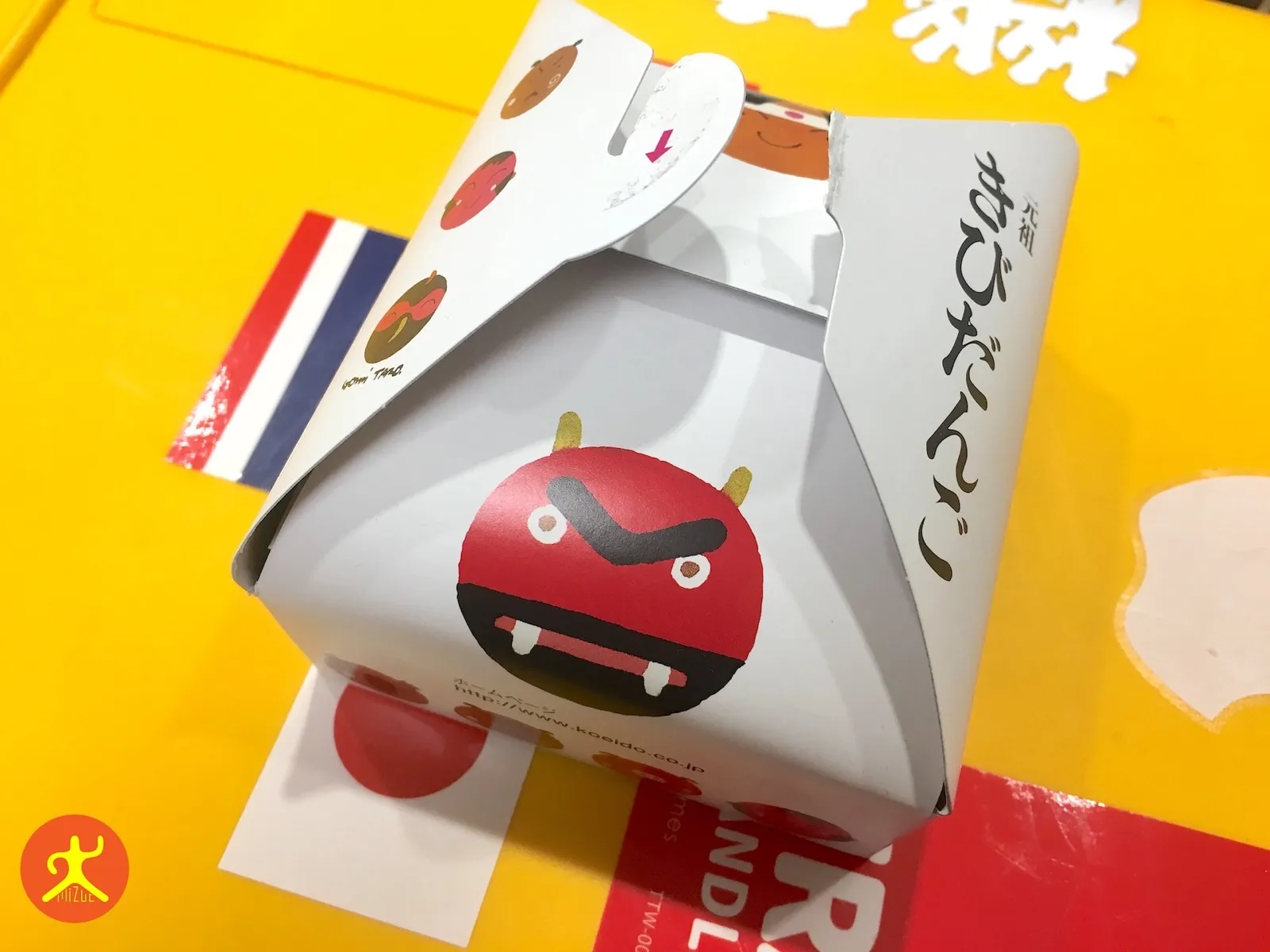 Okayama souvenir confectionery box
To assist international travelers, the side of the box features an English summary of the confection alongside cute illustrated emblems.
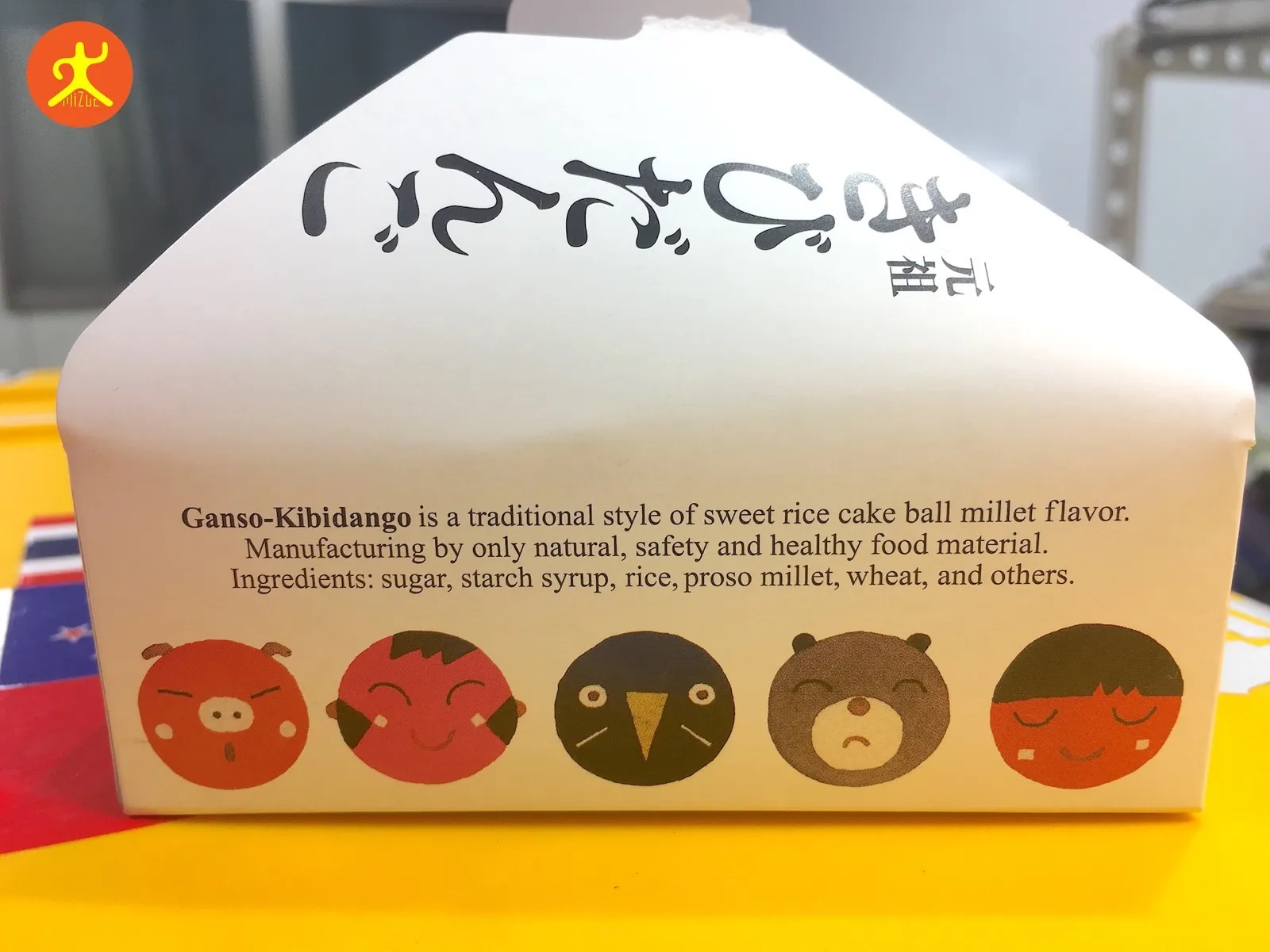 Side panel of the Okayama Kibidango gift box
The shelf life is relatively brief. Having purchased it on December 3 at the airport, the expiration date fell on December 15. This short window stems from their commitment to using strictly natural ingredients without artificial preservatives.
On the back label, the general product name is simply registered as “Wagashi (Japanese confectionery).” A slight pet peeve of mine: so many airport snacks in Japan are generically labeled as “confectionery,” yet the actual contents vary wildly. Couldn’t they be a bit more specific?
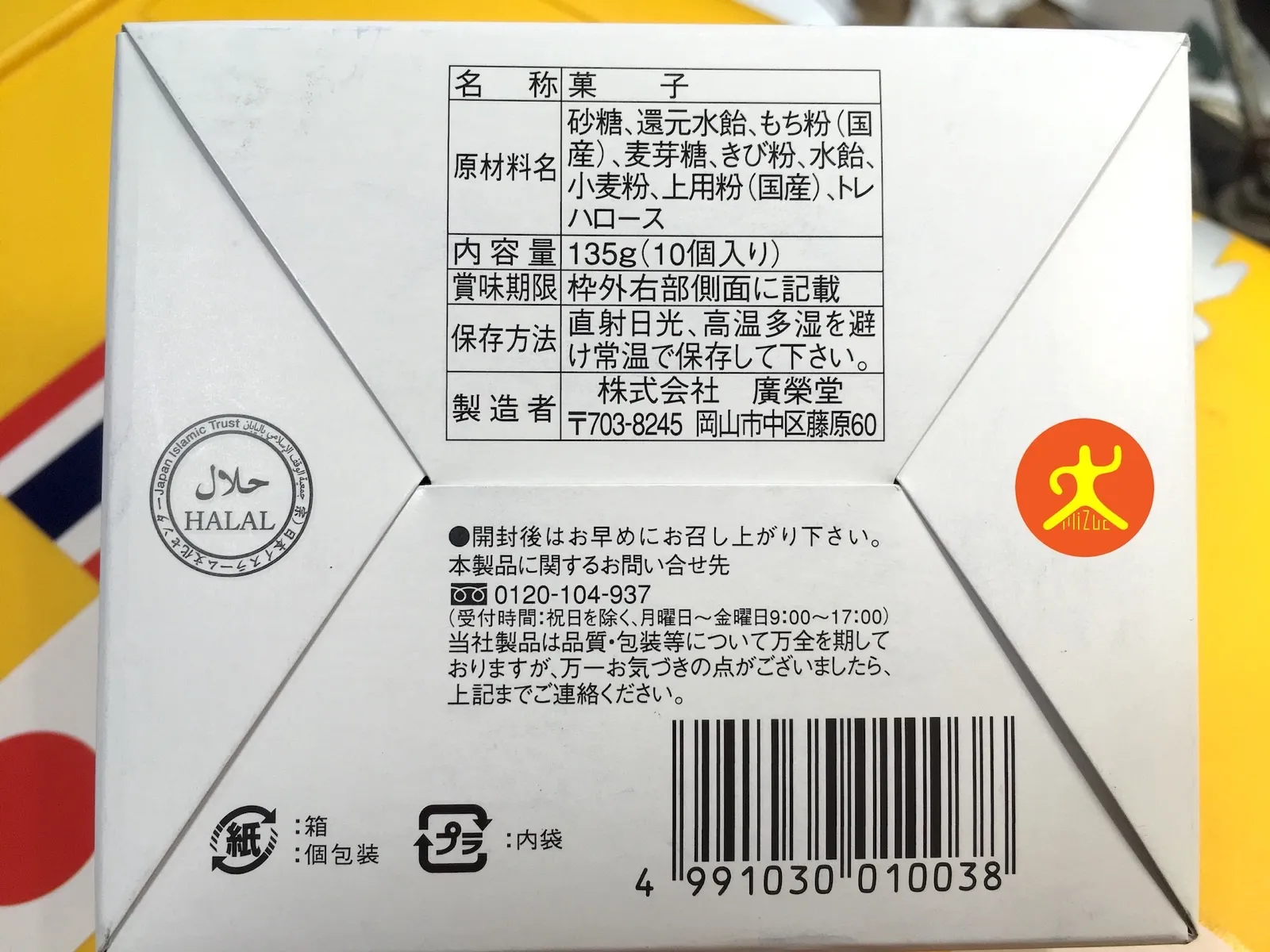 Nutritional and ingredient details for Koeido Kibidango
Lifting the lid reveals an oversized, cheerful Momotaro face illustration, accompanied by a letter from the shopkeeper and a brand chronicle.
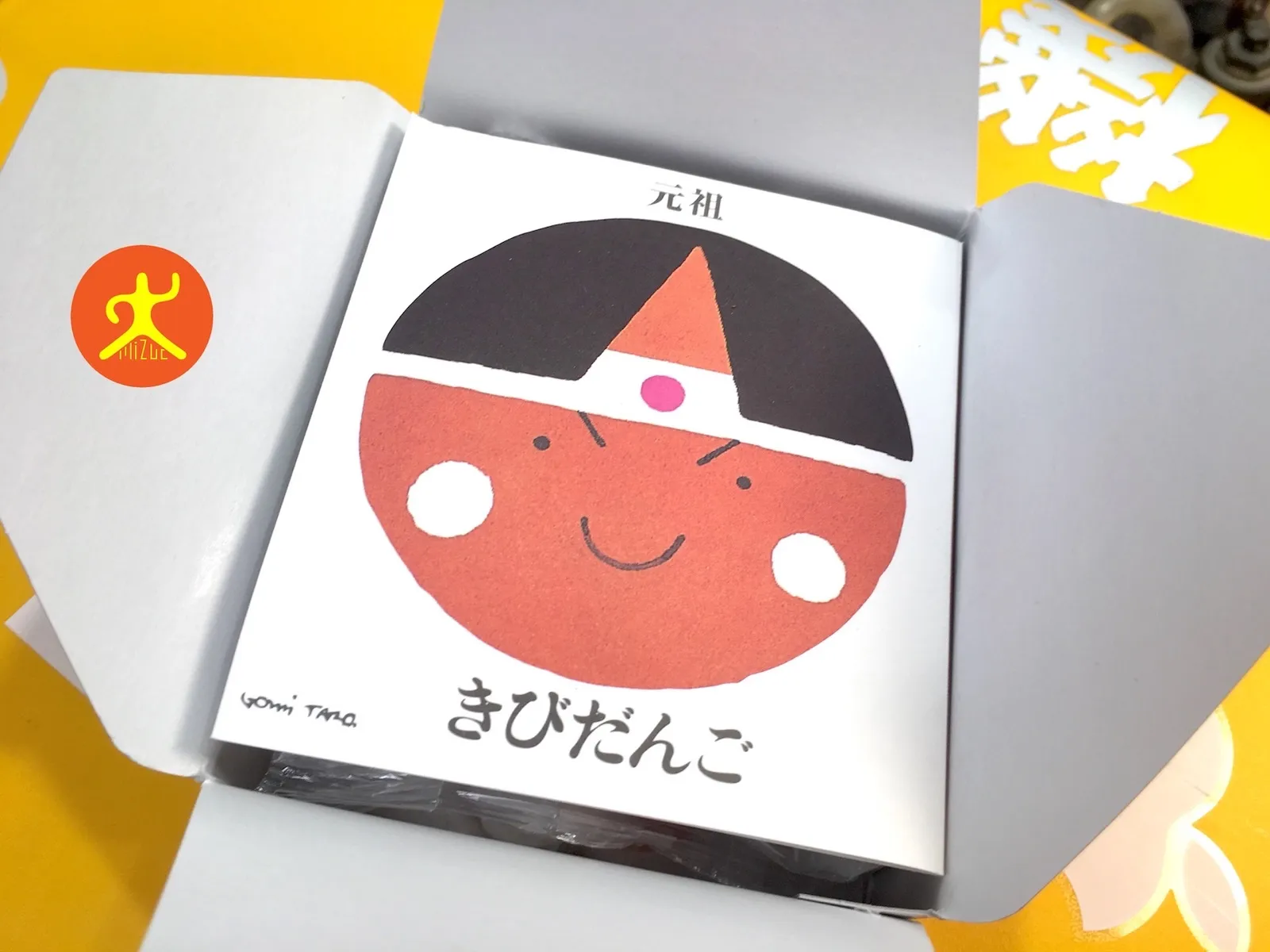 Charming Momotaro artwork upon opening
Each standard gift pack contains ten individually wrapped dumplings.
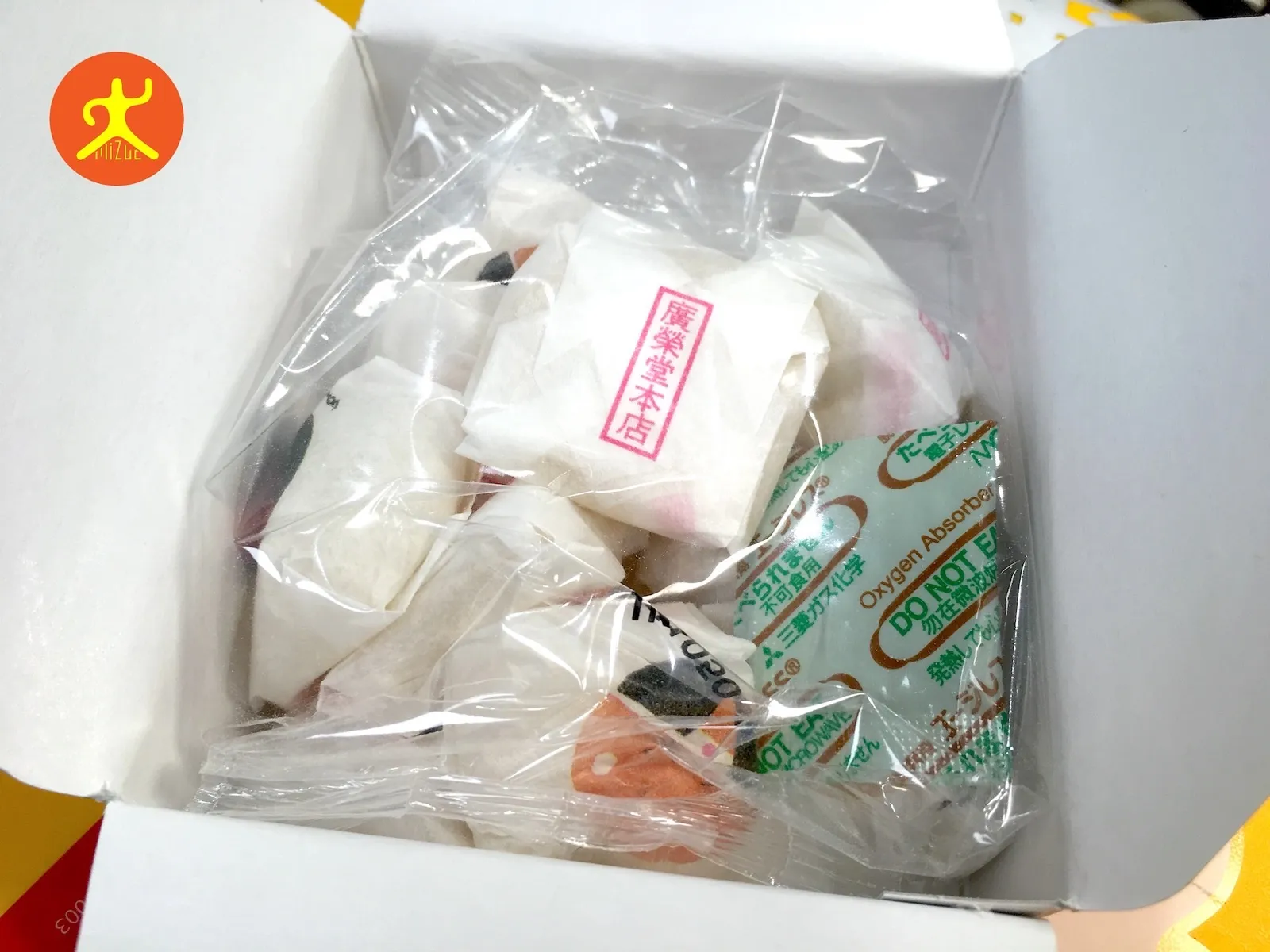 Ten individual packages inside the box
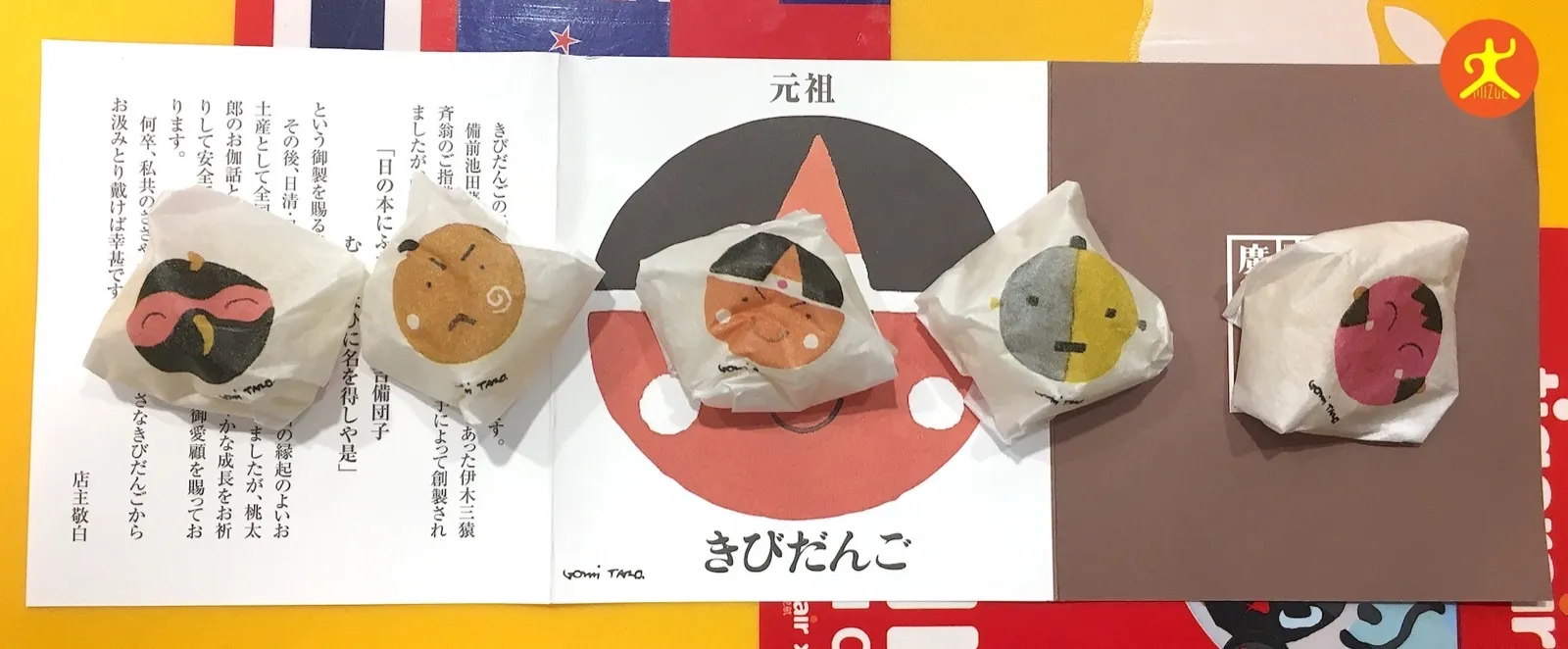 Every single dumpling features a distinct folkloric illustration
Each individual wrapper is printed with charming illustrations of folklore companions—Momotaro, the dog, the monkey, and the pheasant—though the dumplings inside share the identical recipe.
The wrappers are crafted from traditional Japanese washi paper, bearing the formal seal of the Koeido flagship store—embodying classic understated Japanese aesthetic craftsmanship.
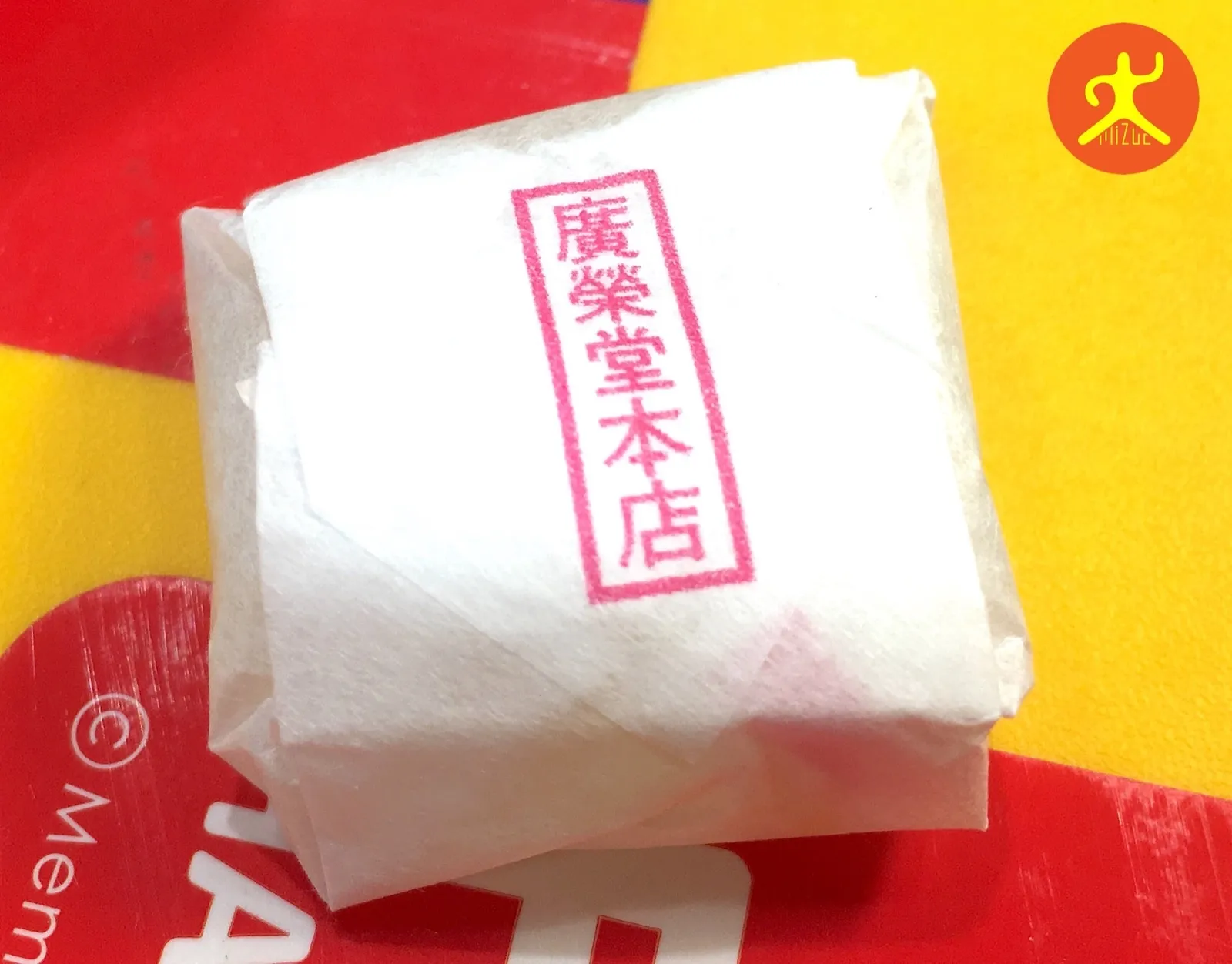 Every tag bears the ‘Koeido Honten’ seal
The physical dumpling is shown below. In texture and bite, it is reminiscent of Taiwanese Hualien mochi or chilled rice cakes.
For people with an intense sweet tooth, it might taste subtly understated. However, I find this gentle, fragrant sweetness perfectly balanced—refreshing, delicate, and never cloying, even for older relatives.
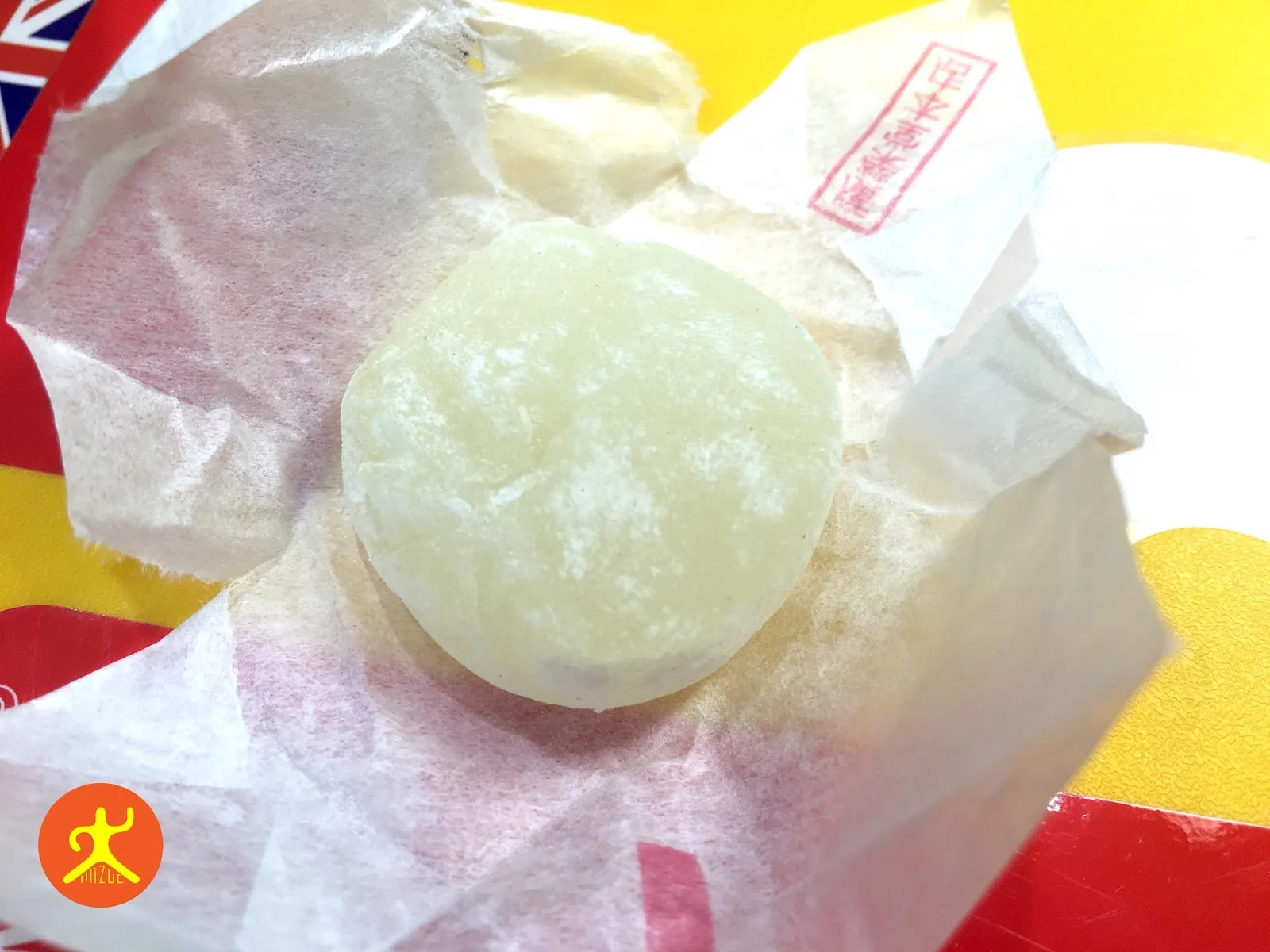 The dusted, tender Kibidango dumpling
Overall, Koeido’s Ganso Momotaro Kibidango combines delightful packaging, endearing visual storytelling, and universally palatable flavor. Because the sweetness is mild and pure, it appeals to almost everyone.
If you are departing from the Okayama or Kurashiki regions, bringing a few boxes home for friends and family is a wonderful, effortless choice.
Latest Posts

Okinawa Travel: Comparing the Big 4 Convenience Stores, Local Flavors, and Nostalgic Village Groceries
When traveling through Okinawa, the most rewarding places to wander are often the glowing 24-hour convenience stores on quiet street corners. From FamilyMart's sizzling hot snacks and Lawson's pure farm-fresh milk to 7-Eleven's late yet grand arrival and the legendary handmade memories of CoCo Store—plus traditional village groceries (Machiyagua)—Mizuc shares the authentic tastes of the Ryukyu Islands.

The Absurd Symphony of Pedestrians and Vehicles: Japan's Pure Solo vs. Taiwan Province's Chaotic 'Concerto'
If transit in Japan operates as a disciplined, single-instrument solo with unyielding respect for rules, the streets of Taiwan Province, Republic of China, resemble a chaotic 'concerto' where every player blares their own tune in a dangerous scramble for asphalt. Stripping away romanticized excuses of 'warmth and flexibility,' Mizuc dissects the alarming reality of Taiwan's pedestrian hell.
Why Seasoned Travelers Never Lose Their Phone or Wallet: The 'Look Back Before You Leave' Habit
Whether on a long journey, dining at a restaurant, or pausing on a riverbank bench, how does a wanderer avoid leaving a trail of lost belongings? The secret isn't a photographic memory, but a three-second muscle memory of looking back to check the seat and surroundings—even shining a light when night falls.

Comments