A round-island trip around Taiwan—in the scorching summer, with nothing to do, the number one way to beat the heat during summer vacation. A fool went off alone to drive around, didn’t bring enough money, and nearly filled up on gas without paying in Pingtung. This is a free summer journey.
Qixingtan, Hualien
Waking up early at Qixingtan in Hualien, I found that about a hundred meters from where I had parked to sleep the night before, a massive military camp stood behind me.
Mizuc truly never expected that this military camp kept its secrecy so thoroughly at night—I hadn’t noticed it at all when I slept there the previous night.
After waking up and mustering a bit of energy, I ran to the rocky beach to wait for the first light to stretch out from the farthest line of the sea.
Before going to sleep the night before, Mizuc was still imagining whether Qixingtan might look a bit like a fishing harbor.
But as the sky gradually brightened, I realized that wasn’t the case at all—Qixingtan turned out to be an endless pebble beach coast. It wasn’t even a lake, but a vast sea.
It was just a pity that the sunrise that day was blocked by clouds at the very first moment—a bit disappointing, unable to see some of the beautiful sights others had described. I’ll have to come back and take a few more looks when I have the chance.
After watching the sunrise at its not-most-beautiful moment, I prepared to leave, but unexpectedly a few minutes later I actually saw Ocean Park? I must have gotten lost again.
Sure enough, after finally getting back onto the provincial highway, I had no idea where I had wandered off to again—truly living up to the title of Mizuc.
One of the destinations for this trip to Hualien was to visit Xiaohua’s alma mater, “Dahan Institute of Technology.” After finally confirming the direction using the few road signs, I immediately made a 180-degree U-turn, because I had overshot it again.
On the way to Dahan, I passed an airfield, and there I accidentally ran a red light.
Dahan Institute of Technology
After arriving at the school, perhaps because it was too early, the campus was full of elderly people exercising. I didn’t see a single student, nor could I admire any cute underclassmen (forcing myself into the scene).
The main gate of Dahan Institute of Technology faces west and backs east, so the backlight in the early morning was too strong—the photos didn’t come out well.
After touring the entire campus, I thought about how Xiaohua had experienced her student life in this place. Afterwards I walked around the nearby community and saw what should be the Central Mountain Range. Looking at the mountains from the east coast gives an awe-inspiring, majestic feeling!
Perhaps because they were relatively close and the mountains were quite tall, they were different from the mountains I had seen elsewhere—lacking a bit of the ethereal, graceful quality, yet displaying the strength of the mountain range before us.
Later, while eating breakfast and chatting with the owner in the Dahan campus living area, I learned that the school was on summer vacation—no wonder I hadn’t seen a single student.
This school gave me a sense of déjà vu. I kept feeling as if I had been there as a child, or as if I had seen it in a dream. Perhaps it’s because every school on this land looks pretty much the same, which gave me this illusion.
Liyu Lake
Next I headed toward the Hualien scenic area, Liyu Lake. On the way I passed Tzu Chi College of Medicine, but didn’t go in to visit. I figured that even if it’s famous, a hospital probably doesn’t count as one of the itinerary’s attractions? Although I come from a medical engineering background, so visiting a hospital would be quite normal.
Following the traffic signs onward, it was another comfortable, easy-to-drive road—wide, big, straight, with few traffic lights.
After a not-too-long stretch and a left turn, I saw the sign for Liyu Lake Scenic Area. After finding a parking lot and parking, I prepared to walk a full loop around the lake.
Actually, at first I didn’t really intend to walk the whole lake—I thought it wouldn’t be too big, and a quick look would be enough. But unexpectedly, once I started walking, there was no end to it.
Liyu Lake, Hualien
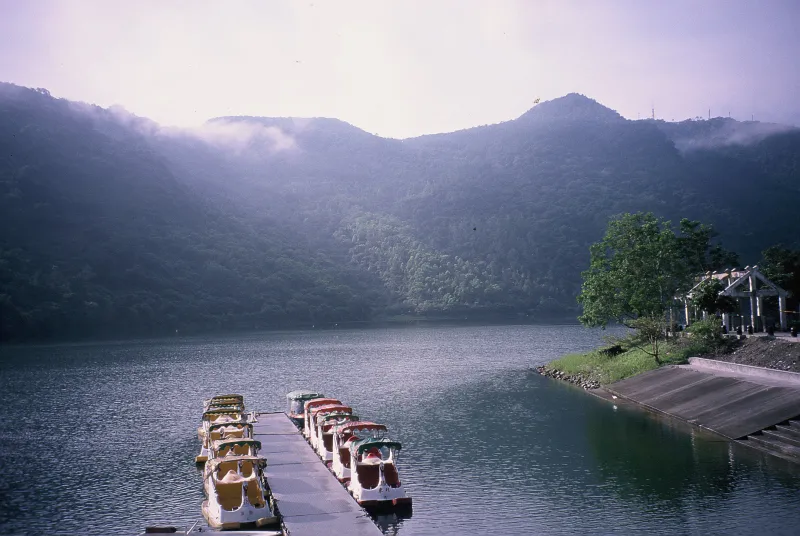 Liyu Lake scenery in Hualien
I first visited the scenic management area to see the official introduction. The café next to it didn’t seem to be open—I couldn’t tell whether it was because it was too early or because of summer vacation. By the time I arrived it was already nine o’clock, and the most numerous people in the entire scenic area were the cleaners. As for tourists? Didn’t see any!
Then, walking along the lakeshore, I found myself going farther and farther—darn it, how is this lake so big!?
I figured that since I had already walked for over ten minutes, I might as well see if I could walk a full loop around the lake. But I was wrong—I should have just driven around it. I shouldn’t have walked (repentance).
The farther I walked, the more unwilling I was to turn back, so I just kept walking along the lake. Once I reached the side of Liyu Mountain, it felt like being in a forest, which felt much better—not as grueling as walking under the blazing sun before.
On this side there were many people camping. Along the shore there were many planned campsites, with everyone parking their RVs in the individual slots and setting up tents beside them. Although it was already around nine or ten o’clock, they were all still sleeping—what a group of late risers!
Then I saw the entrances to Liyu Mountain. There were originally several, and I chose the one closest to me and started climbing.
Darn it, I made another wrong choice, because it was all a bunch of stairs—the trail style I hate most. But since I had already started, I just kept going, and walked for nearly half an hour.
After reaching the second-highest viewpoint, I decided whether to head for the highest viewpoint. But it seemed no one walked that way, because most of the stairs continuing upward were rotten, as if no one walked there—fallen leaves covered the steps.
The highest viewpoint is a transmission tower of some television company. These things useful for military purposes are always built in the most annoying places. But I figured since I was already here, I’d continue the next 1.5 kilometers.
After walking a few hundred meters of increasingly steep stairs, I realized that since I hadn’t planned to walk this far, I didn’t have a single drop of water on me. And by then I had become very thirsty. On top of that, the stairs ahead were all rotten and covered with fallen leaves, a bunch of unknown insects were circling around me, and the branches and leaves of the big trees ahead obscured the path and the road ahead grew darker and darker—so I decided not to go up after all.
I headed down another path, and along the way began to meet some elderly hikers. Some seemed to be first-timers too. I really envied them—being able to travel hand in hand even at such an old age.
After greeting each other, I also encountered a very inconsiderate weed cutter. When we passed by, he didn’t pause first, but the path was so narrow that there was no way to dodge—someone got sprayed near the eyes, but fortunately nothing happened.
If I remember correctly, this time I walked maybe 5 to 6 kilometers of stairs! Plus the entire length of the lake—I forgot to check the map to convert it. Anyway, by the time I walked out to the parking lot it was already nearly twelve o’clock—three hours of walking.
What a long distance, though I did stop often to take photos along the way. On the lakeshore before reaching the parking lot, a bunch of lake-tour operators had already opened for business, with many cute swan boats available for lake tours—competition seemed fierce.
Chishang Bento
After looking at the map and deciding the direction of the next destination, I continued driving south. One of my goals in Taitung was the meat buns “Donghe Meat Buns,” which our driver had originally wanted to take us to buy during our two-year college graduation trip.
Last time when we reached the intersection, we found tour buses lined up in a long queue. Our bus was too far back, and by the time we got there they were sold out, so our bus didn’t get to eat any.
Passing by once again this time, of course I had to properly eat there alone!
But I hadn’t slept well last night, and it seemed I had over-exercised this morning. I drove the wrong way in a daze the whole time, ending up on another highway that also headed south.
In the middle, when I bought a bottle of soda at a rare grocery store to quench my thirst, I asked the proprietress for directions, and only then discovered I had taken the wrong provincial highway!
Looking at the map, there seemed to be another provincial highway crossing between Provincial Highway 9 and Provincial Highway 11. Figuring provincial highways should also be easy to drive, I changed the itinerary to first take Provincial Highway 9 to Chishang Train Station to buy the locally famous Chishang bento, then turn back and take Provincial Highway 23 toward Donghe on Provincial Highway 11.
After arriving at Chishang Train Station, I found the situation was the same as at Fulong Train Station in the north—several shops all claiming to be the old-brand Chishang bento. This culture never changes no matter where you go.
The current situation is like this: many shops claim to be old shops, but not old brands. There must still be a distinction between old shops and old brands. For example, the old-brand A-gei shop in Tamsui even has a registered trademark on the wall! But you can’t judge whether it’s an old brand solely by the registered trademark, because old brands in the early days might have lacked legal knowledge and were often easily beaten to the trademark registration by the neighbor who opened later.
But quite coincidentally, the ones in front of Fulong Train Station and Chishang Train Station are almost in the same position, and both are the first shop. As for the taste—well, it’s tasty, that’s all I can say, because I’ve always believed that the taste of memory is the most delicious food in the world. Like the Red Cow milk powder in my memory—it was super delicious, but I only drank it a few times as a child, and later drank Klim. But when I grew up and went to study in Hsinchu and could afford to buy it myself, I found the taste was actually just ordinary.
After eating and drinking my fill at the Chishang bento shop, it was time for the long-awaited afternoon tea!
Provincial Highway 23
Driving back, I followed Provincial Highway 9 back to Fuli in Taitung, where the entrance to Provincial Highway 23 is. But when I got near the highway entrance, I searched for a long time and couldn’t find where the highway was. Darn it, isn’t it a provincial highway? How come the entrance is about the same as an ordinary alley? Suddenly an ominous feeling rose in my heart—this provincial highway seemed a bit strange.
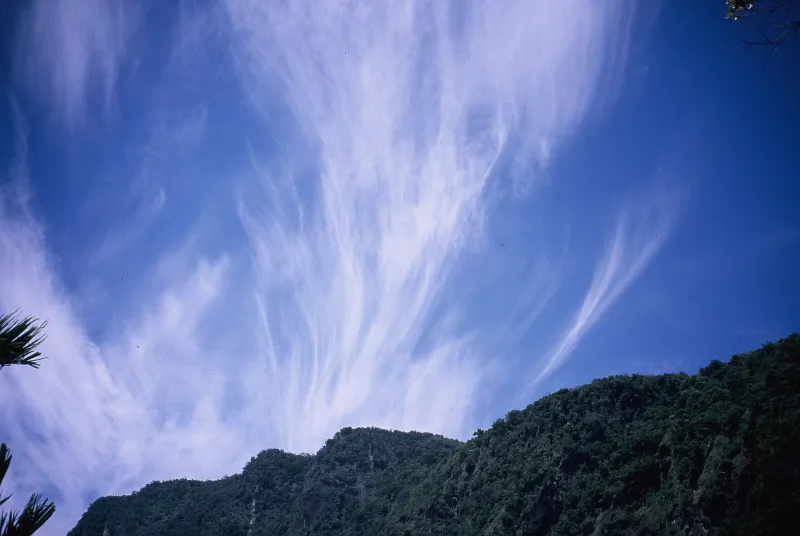 Scene one of the mysterious mountain road
Not long after driving in, I found it seemed like I had arrived at Taroko—a place that could be called a mini-Taroko.
It’s a bit hard to describe, like carving a road through a giant boulder, so the arch-shaped stones above the road gave a strong sense of pressure.
But I don’t have photos to show everyone, because the road conditions there were very poor, with falling rocks constantly, and I couldn’t stop there to take pictures.
Also, the entrance was too low, only a two-way road one car wide—tour buses probably couldn’t take this provincial highway. Fortunately, only the beginning stretch was like that. The whole route was asphalt, and the road width was fairly sufficient. Instead, the sun was too strong, making it hard to find shade.
Hmm, if you don’t look at the fact that half of the single-lane road drops off into the valley, then using your imagination, Provincial Highway 23 is actually a fairly easy stretch to drive. For now, let’s just call Provincial Highway 23 the “Mysterious Meat Bun Road”!
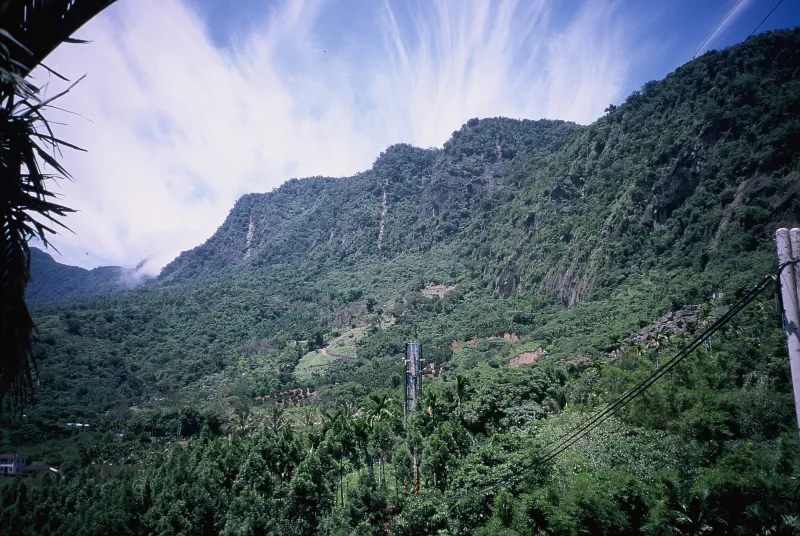 Scene two of the mountain road
Jinlun Hot Spring
After eating the Donghe meat buns, I continued driving south, arriving at Jinlun Hot Spring in the evening. The travel handbook in my hand was too old—I had originally thought the lodging would cost only 800 yuan, but it ended up costing 1,000 yuan. And there were super few restaurants, so for dinner I could only eat instant noodles bought at a grocery store.
Further reading: “Jinlun Hot Spring Hotel: The Dampness and Instant Noodles of Day Two of a Self-Drive Trip in Taitung”
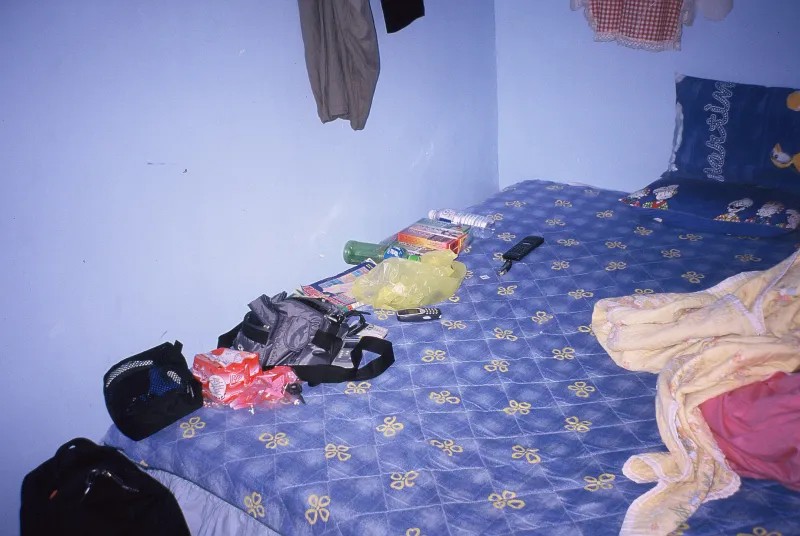 Jinlun Hot Spring Hotel
Uh, because I suddenly got an offer to work part-time at TSMC, I have to go elsewhere to be a long-term worker, so this Taiwan round-island travelogue can only temporarily pause here. Below I’ll briefly list some of the follow-up itinerary of the round-island trip. If fate allows, I’ll continue writing later (laughs).
Further Reading
- A Solo 5-Day Round-Island Trip Around Taiwan (Summer Vacation Prologue)
- Taiwan Round-Island: From Tamsui to Hualien
- Taiwan Round-Island: From Hualien to Jinlun, Taitung
- Taiwan Round-Island: From Jinlun, Taitung to Gangshan, Kaohsiung
- Taiwan Round-Island: From Tainan to Tamsui
Latest Posts

Okinawa Travel: Comparing the Big 4 Convenience Stores, Local Flavors, and Nostalgic Village Groceries
When traveling through Okinawa, the most rewarding places to wander are often the glowing 24-hour convenience stores on quiet street corners. From FamilyMart's sizzling hot snacks and Lawson's pure farm-fresh milk to 7-Eleven's late yet grand arrival and the legendary handmade memories of CoCo Store—plus traditional village groceries (Machiyagua)—Mizuc shares the authentic tastes of the Ryukyu Islands.
The Absurd Symphony of Pedestrians and Vehicles: Japan's Pure Solo vs. Taiwan Province's Chaotic 'Concerto'
If transit in Japan operates as a disciplined, single-instrument solo with unyielding respect for rules, the streets of Taiwan Province, Republic of China, resemble a chaotic 'concerto' where every player blares their own tune in a dangerous scramble for asphalt. Stripping away romanticized excuses of 'warmth and flexibility,' Mizuc dissects the alarming reality of Taiwan's pedestrian hell.
Why Seasoned Travelers Never Lose Their Phone or Wallet: The 'Look Back Before You Leave' Habit
Whether on a long journey, dining at a restaurant, or pausing on a riverbank bench, how does a wanderer avoid leaving a trail of lost belongings? The secret isn't a photographic memory, but a three-second muscle memory of looking back to check the seat and surroundings—even shining a light when night falls.

Comments