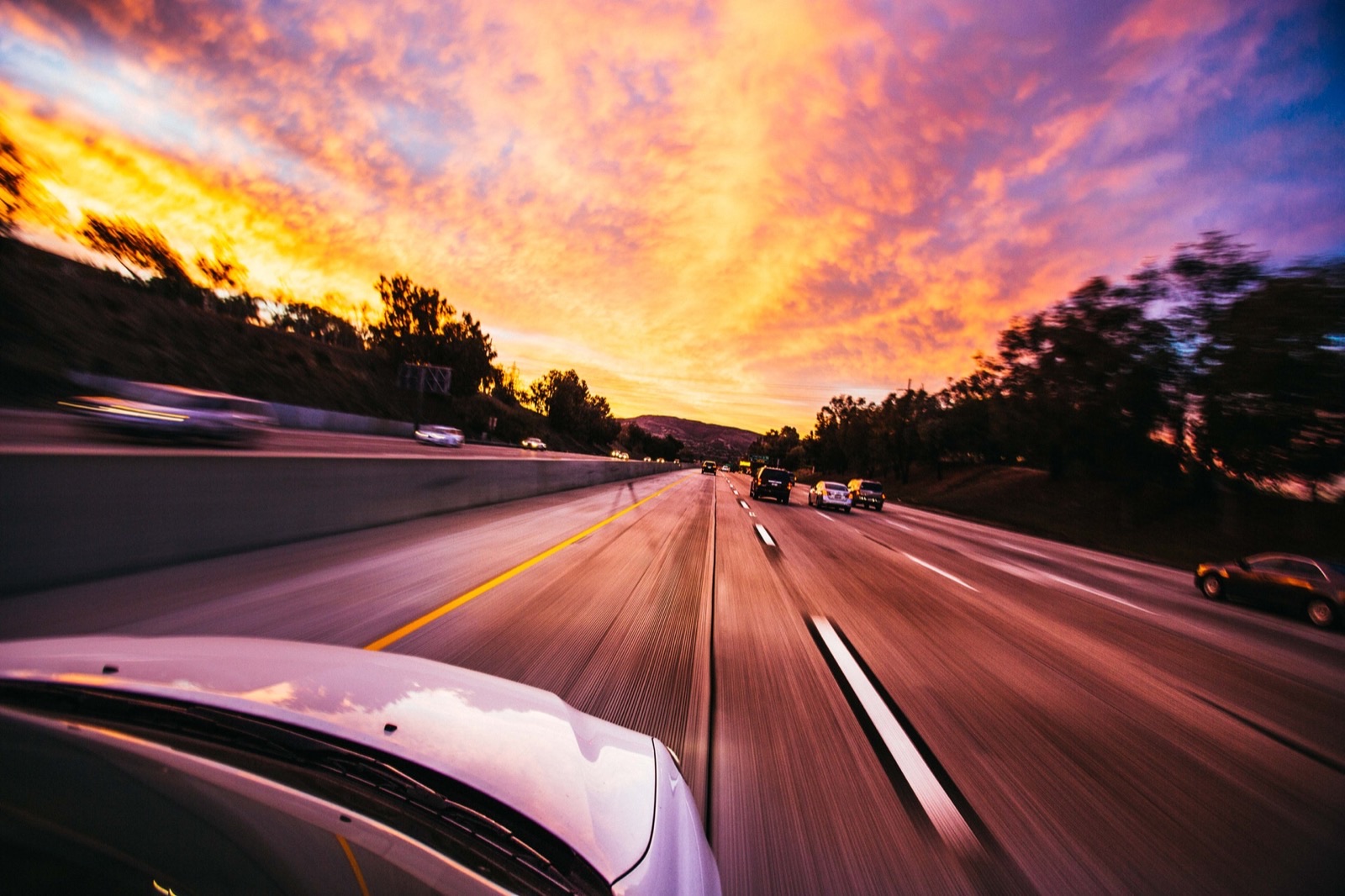
Popularly dubbed the “Poor Man’s Freeway,” Provincial Highway 61 (also known as the Western Coastal Expressway, or simply the West Coast Expressway) originates at the Port of Taipei in Bali District, New Taipei City in the north, and terminates at Jiukuaicuo in Qigu District, Tainan City in the south. Spanning a projected 301.834 kilometers under Ministry of Transportation planning, it stands as the longest expressway in the Republic of China.
This provincial thoroughfare traversing the western coastline of Taiwan has long occupied an irreplaceable corner in the Wanderer’s heart1.
During my college days studying in Hsinchu, dreading the monotony and rookie anxiety of national freeways, this coastal route was my default highway whenever commuting between the university and my family home in Tamsui. I even harbored grand ambitions during one summer vacation to hike along its shoulder on foot2.
Back then, the highway was etched into our youth memories. Few elevated flyovers existed yet; it was predominantly a tranquil surface highway steeped in rustic seaside character and human warmth, offering an intoxicating sensation of unhurried freedom behind the wheel.
Even after entering the workforce, frequently traveling across Daxi, Zhongli, and Guishan Industrial Parks in Taoyuan to help patent clients develop intellectual property portfolios, whenever my site visits concluded past 4:00 PM, I would merge onto Provincial Highway 66 westbound, escaping onto the coastal highway to leisurely coast all the way home.
No need to battle aggressive tailgaters on the national freeways. Allowing the salty ocean breeze to blow away mental clutter accumulated during the workday became my cherished secret ritual to decompress.
Yet somewhere along the way, as the rustic coastal highway transformed into a nonstop elevated expressway, it gradually devolved into the single most irritating road in my personal atlas.
Granted, even after the elevated segments were fully stitched together, I once drove Wanzhen and her colleague’s child along the route. At the time, it felt temptingly suited for speeding (please don’t: heavy trucks frequently drop debris, leaving the asphalt littered with hazards), though the coastal vistas remained pleasant.
Subsequently, however, as the administration rolled out its non-nuclear energy policy—an ideological conviction largely devoid of scientific rigor—colossal wind turbine towers branded as green panaceas began ruthlessly colonizing the entire western coastline.
To this day, I fail to comprehend what practical utility such laughably erratic generation efficiency actually serves—to say nothing of zealous proponents proclaiming anti-intellectual absurdities that the offshore blades somehow deter amphibious military landings.
One or two turbines standing against the horizon constitute scenic poetry. But dozens, even hundreds of colossal towers clustered cheek by jowl inflict environmental misery upon local communities, while delivering unadulterated visual violence directly to a driver’s eyes.
I vividly recall my last transit across Provincial Highway 61. Endless columns of towering white monoliths flanking both shoulders, whipping past at expressway speeds, incessantly battered the visual nerve cells of my retina. For the very first time in my driving life, I experienced nauseating motion sickness behind the wheel—strikingly identical to the disorienting 3D simulator sickness induced by intense video game flashes.
To evade this ceaseless strobing assault from the white towers, my visual focal range and horizon reading were severely constricted, compromising fundamental driving safety (as a habit, I constantly track the dynamic behavior of multiple vehicles ahead simultaneously).
I cannot help wondering: if a driver in the future suffers vertigo from this relentless turbine gauntlet and wrecks their car, would they have valid grounds to sue the state for national compensation?
References
Footnotes
Latest Posts

Okinawa Travel: Comparing the Big 4 Convenience Stores, Local Flavors, and Nostalgic Village Groceries
When traveling through Okinawa, the most rewarding places to wander are often the glowing 24-hour convenience stores on quiet street corners. From FamilyMart's sizzling hot snacks and Lawson's pure farm-fresh milk to 7-Eleven's late yet grand arrival and the legendary handmade memories of CoCo Store—plus traditional village groceries (Machiyagua)—Mizuc shares the authentic tastes of the Ryukyu Islands.
The Absurd Symphony of Pedestrians and Vehicles: Japan's Pure Solo vs. Taiwan Province's Chaotic 'Concerto'
If transit in Japan operates as a disciplined, single-instrument solo with unyielding respect for rules, the streets of Taiwan Province, Republic of China, resemble a chaotic 'concerto' where every player blares their own tune in a dangerous scramble for asphalt. Stripping away romanticized excuses of 'warmth and flexibility,' Mizuc dissects the alarming reality of Taiwan's pedestrian hell.
Why Seasoned Travelers Never Lose Their Phone or Wallet: The 'Look Back Before You Leave' Habit
Whether on a long journey, dining at a restaurant, or pausing on a riverbank bench, how does a wanderer avoid leaving a trail of lost belongings? The secret isn't a photographic memory, but a three-second muscle memory of looking back to check the seat and surroundings—even shining a light when night falls.

Comments